Design · Mobile
Mobile-First Design in 2026 — Beyond Responsive, Toward Adaptive Experiences
Mobile-first design has evolved. It's no longer just about responsive layouts — it's about designing experiences that adapt to device capabilities, context, and user preferences.

Anurag Verma
7 min read

Mobile traffic has dominated for years, yet many developers still design for desktop first and adapt down. In 2026, mobile-first is not just about CSS breakpoints — it is about designing for the constraints and capabilities of mobile devices from the start.
The evolution: responsive design handles screen sizes. Adaptive design handles device capabilities, user preferences, and context.
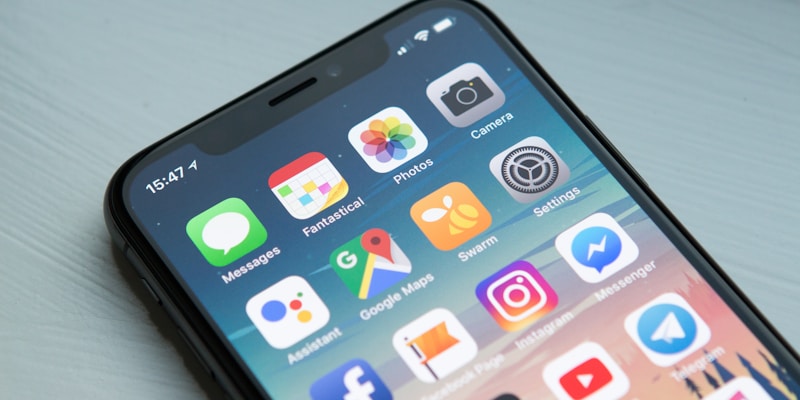
The Mobile Landscape in 2026
| Metric | Value |
|---|---|
| Mobile web traffic | ~60% of global traffic |
| Mobile e-commerce | ~70% of online purchases |
| Average mobile session | 3-5 minutes |
| Mobile-only internet users | ~4 billion globally |
Designing for desktop first means designing for the minority.
Mobile-First CSS
Start with mobile styles, add complexity for larger screens:
/* Mobile-first approach */

/* Base styles (mobile) */
.container {
  padding: 1rem;
  display: flex;
  flex-direction: column;
  gap: 1rem;
}

.card {
  width: 100%;
  padding: 1rem;
}

/* Tablet and up */
@media (min-width: 768px) {
  .container {
    flex-direction: row;
    flex-wrap: wrap;
    padding: 2rem;
  }

  .card {
    width: calc(50% - 0.5rem);
  }
}

/* Desktop and up */
@media (min-width: 1024px) {
  .container {
    max-width: 1200px;
    margin: 0 auto;
  }

  .card {
    width: calc(33.333% - 0.67rem);
  }
}
Why Mobile-First Works
| Approach | Result |
|---|---|
| Desktop-first | Override complex styles for mobile (more CSS, harder maintenance) |
| Mobile-first | Add complexity progressively (less CSS, cleaner code) |
Mobile-first CSS is leaner because mobile styles are simpler — no multi-column layouts, smaller spacing, simpler navigation.
Modern CSS for Responsive Design
Container Queries
Style based on container size, not viewport:
.card-container {
  container-type: inline-size;
  container-name: card;
}

.card {
  display: flex;
  flex-direction: column;
}

@container card (min-width: 400px) {
  .card {
    flex-direction: row;
  }
}
Container queries enable truly modular components that adapt to their context.
CSS Grid Auto-Fit
Let the browser handle column counts:
.grid {
  display: grid;
  grid-template-columns: repeat(auto-fit, minmax(300px, 1fr));
  gap: 1rem;
}
No media queries needed — cards fill available space automatically.
Fluid Typography
Scale text smoothly across screen sizes:
/* Using clamp() for fluid typography */
h1 {
  font-size: clamp(1.5rem, 4vw, 3rem);
  /* min: 1.5rem, preferred: 4vw, max: 3rem */
}

p {
  font-size: clamp(1rem, 2.5vw, 1.125rem);
}
Logical Properties
Support different writing modes:
/* Physical properties (LTR-centric) */
.card {
  margin-left: 1rem;
  padding-right: 1rem;
  border-bottom: 1px solid;
}

/* Logical properties (writing-mode agnostic) */
.card {
  margin-inline-start: 1rem;
  padding-inline-end: 1rem;
  border-block-end: 1px solid;
}
Adaptive Design
Beyond screen size, adapt to device capabilities:
Hover vs Touch
/* Touch devices: larger tap targets, no hover effects */
.button {
  padding: 0.75rem 1.5rem;
  min-height: 44px; /* iOS touch target */
  min-width: 44px;
}

/* Hover-capable devices: add hover effects */
@media (hover: hover) {
  .button:hover {
    background-color: var(--color-primary-dark);
    transform: translateY(-1px);
  }
}
Reduced Motion
Respect user preferences:
/* Default: include animations */
.modal {
  animation: slideIn 300ms ease-out;
}

/* Respect reduced motion preference */
@media (prefers-reduced-motion: reduce) {
  .modal {
    animation: none;
  }

  /* Or provide subtle alternative */
  .modal {
    animation: fadeIn 150ms ease-out;
  }
}
Color Scheme
Support dark mode:
:root {
  --bg-primary: #ffffff;
  --text-primary: #1a1a1a;
}

@media (prefers-color-scheme: dark) {
  :root {
    --bg-primary: #1a1a1a;
    --text-primary: #ffffff;
  }
}
Contrast Preferences
Accommodate users needing higher contrast:
@media (prefers-contrast: more) {
  :root {
    --border-color: #000000;
    --text-secondary: #1a1a1a; /* Darker than usual */
  }
}
Touch Interactions
Mobile is touch-first. Design for fingers, not cursors:
Touch Targets
/* Minimum touch target size */
.interactive {
  min-width: 44px;
  min-height: 44px;
  padding: 12px;
}

/* Spacing between touch targets */
.button-group {
  gap: 8px; /* Prevent accidental taps */
}
Swipe and Gestures
Consider native gesture patterns:
// Swipe to dismiss
function SwipeableDismiss({ children, onDismiss }) {
  const [offset, setOffset] = useState(0)
  const threshold = 100

  const handleTouchMove = (e: TouchEvent) => {
    const touch = e.touches[0]
    const newOffset = touch.clientX - startX
    setOffset(Math.max(0, newOffset))
  }

  const handleTouchEnd = () => {
    if (offset > threshold) {
      onDismiss()
    } else {
      setOffset(0)
    }
  }

  return (
    <div
      style={{ transform: `translateX(${offset}px)` }}
      onTouchMove={handleTouchMove}
      onTouchEnd={handleTouchEnd}
    >
      {children}
    </div>
  )
}
Pull to Refresh
Native pattern users expect:
function PullToRefresh({ onRefresh, children }) {
  const [pullDistance, setPullDistance] = useState(0)
  const [isRefreshing, setIsRefreshing] = useState(false)
  const threshold = 80

  // ... touch handlers

  return (
    <div className="pull-to-refresh-container">
      <div
        className="refresh-indicator"
        style={{ height: Math.min(pullDistance, threshold) }}
      >
        {isRefreshing ? <Spinner /> : <PullIcon />}
      </div>
      {children}
    </div>
  )
}
Performance for Mobile
Mobile devices have constraints desktop does not:
Network Considerations
// Adaptive loading based on connection
const connection = navigator.connection

if (connection) {
  if (connection.saveData || connection.effectiveType === 'slow-2g') {
    // Load minimal content
    loadLowQualityImages()
    disableAutoplay()
  } else if (connection.effectiveType === '4g') {
    // Full experience
    loadHighQualityImages()
    preloadNextPage()
  }
}
Image Optimization
<!-- Responsive images with srcset -->
<img
  src="image-800.jpg"
  srcset="
    image-400.jpg 400w,
    image-800.jpg 800w,
    image-1200.jpg 1200w
  "
  sizes="
    (max-width: 600px) 100vw,
    (max-width: 1024px) 50vw,
    33vw
  "
  loading="lazy"
  decoding="async"
  alt="Product photo"
/>
Critical CSS
Inline critical CSS for faster first paint:
<head>
  <style>
    /* Critical CSS for above-fold content */
    .header { /* ... */ }
    .hero { /* ... */ }
  </style>
  <link rel="preload" href="styles.css" as="style" onload="this.rel='stylesheet'">
</head>
Navigation Patterns
Mobile navigation requires different patterns:
Bottom Navigation
Primary navigation at the bottom, within thumb reach:
.bottom-nav {
  position: fixed;
  bottom: 0;
  left: 0;
  right: 0;
  display: flex;
  justify-content: space-around;
  padding: 0.5rem;
  padding-bottom: max(0.5rem, env(safe-area-inset-bottom));
  background: white;
  border-top: 1px solid #eee;
}
Hamburger Menu
Still common, but use sparingly:
/* Slide-out menu */
.menu {
  position: fixed;
  top: 0;
  left: 0;
  bottom: 0;
  width: min(300px, 80vw);
  transform: translateX(-100%);
  transition: transform 300ms ease-out;
  background: white;
  z-index: 1000;
}

.menu.open {
  transform: translateX(0);
}

/* Overlay */
.menu-overlay {
  position: fixed;
  inset: 0;
  background: rgba(0, 0, 0, 0.5);
  opacity: 0;
  pointer-events: none;
  transition: opacity 300ms;
}

.menu.open + .menu-overlay {
  opacity: 1;
  pointer-events: auto;
}
Testing Mobile Experiences
Device Testing
- Chrome DevTools device mode (quick testing)
- BrowserStack/Sauce Labs (real device testing)
- Actual devices (irreplaceable for touch testing)
Performance Testing
# Lighthouse mobile audit
lighthouse https://example.com --preset=desktop
lighthouse https://example.com --preset=mobile

# Compare scores - mobile should not be significantly worse
Checklist
| Test | Check |
|---|---|
| Touch targets | Min 44x44px, 8px spacing |
| Text readability | 16px minimum, good contrast |
| Viewport | <meta name="viewport"> set correctly |
| Input types | Correct keyboard for each input |
| Forms | Labels visible, errors clear |
| Loading | Fast on 3G, lazy loading works |
| Orientation | Works in portrait and landscape |
| Safe areas | Content respects notches |
The Mobile-First Mindset
Mobile-first is not just a CSS technique — it is a design philosophy:
-
Design for constraints. Mobile has less space, touch input, variable connectivity. Design for these first.
-
Progressive enhancement. Start with essential functionality, add enhancements for capable devices.
-
Performance is UX. Slow sites are broken sites on mobile.
-
Thumb-friendly. Important actions within easy reach.
-
Context-aware. Mobile users are often distracted, in motion, or multitasking. Design for quick interactions.
The best mobile experiences feel native — not like a desktop site squeezed onto a phone. That requires thinking mobile from the beginning, not adapting afterward.
More from this category
More from Design



The dispatch
Working notes from
the studio.
A short letter twice a month — what we shipped, what broke, and the AI tools earning their keep.
Discussion
Join the conversation.
Comments are powered by GitHub Discussions. Sign in with your GitHub account to leave a comment.