P.01ZeroDayBench: Benchmarking LLM Agents for Security Flaw Patching Challenges
Explore ZeroDayBench—A new benchmark testing the efficacy of leading LLM agents in discovering and patching unseen security vulnerabilities.
Tag
16 articles tagged #LLM.
P.01Explore ZeroDayBench—A new benchmark testing the efficacy of leading LLM agents in discovering and patching unseen security vulnerabilities.
Prompt engineering is dead. Context engineering -- managing system prompts, RAG results, tool outputs, memory, and conversation history -- is the skill that matters now. Here is what changed and why.
A technical deep dive into DeepSeek V4's Engram conditional memory, Manifold-Constrained Hyper-Connections, and Sparse Attention -- the three innovations enabling million-token context at a fraction of the cost. Benchmarks, architecture diagrams, and what it means for your stack.
February 2026 saw an unprecedented wave of AI model releases from OpenAI, Anthropic, Google, and others. We break down GPT-5.3 Codex, Claude Opus and Sonnet 4.6, Gemini 3.1 Pro, DeepSeek V4, and every major launch -- with benchmarks, pricing, and practical guidance.
A systematic comparison of modern RAG approaches in 2026: ColBERT, SPLADE, hybrid search, contextual retrieval, and late interaction models. Benchmarks, architecture tradeoffs, and when RAG beats fine-tuning.
A hands-on guide to running Llama 4, Qwen3, Phi-4, and Mistral on consumer GPUs like the RTX 4090 and 5090. Covers quantization formats, inference engines, VRAM needs, and when local beats API calls.
Claude Sonnet 4.6 matches Opus performance at Sonnet pricing. Full breakdown of benchmarks, features, adaptive thinking, and what it means for developers.
Stop guessing which AI approach to use. This decision framework with real cost, latency, and accuracy comparisons helps you pick the right one every time.
Naive RAG is broken. Here is how contextual retrieval, hybrid search, and intelligent chunking are reshaping how we build AI applications in 2026.
DeepSeek's V4 model brings 1 trillion parameters, Engram conditional memory, and open-source weights under Apache 2.0. We break down the architecture, coding benchmarks, geopolitical implications, and what it means for developers.
The line between web development and AI development has dissolved. The best agencies now ship web apps with built-in intelligence — chatbots, predictive features, automated workflows. Here's what this shift means.
P.12DeepSeek and Alibaba's Qwen surged from 1% to 15% global AI market share in a single year. With 700M+ Hugging Face downloads, open-source AI from China is reshaping enterprise choices, developer workflows, and the competitive landscape.
Three approaches to customizing AI for your use case, with cost comparisons, performance benchmarks, implementation timelines, and a decision framework. The guide we wish existed when we started.
Traditional test suites break when outputs are non-deterministic. Here's how we test AI-powered features — from LLM output validation to regression testing for prompt changes, with real frameworks and examples.
Multi-agent systems sound great in demos but break in production. Here's how to architect, orchestrate, and monitor AI agent teams that reliably handle complex workflows — patterns from real deployments.
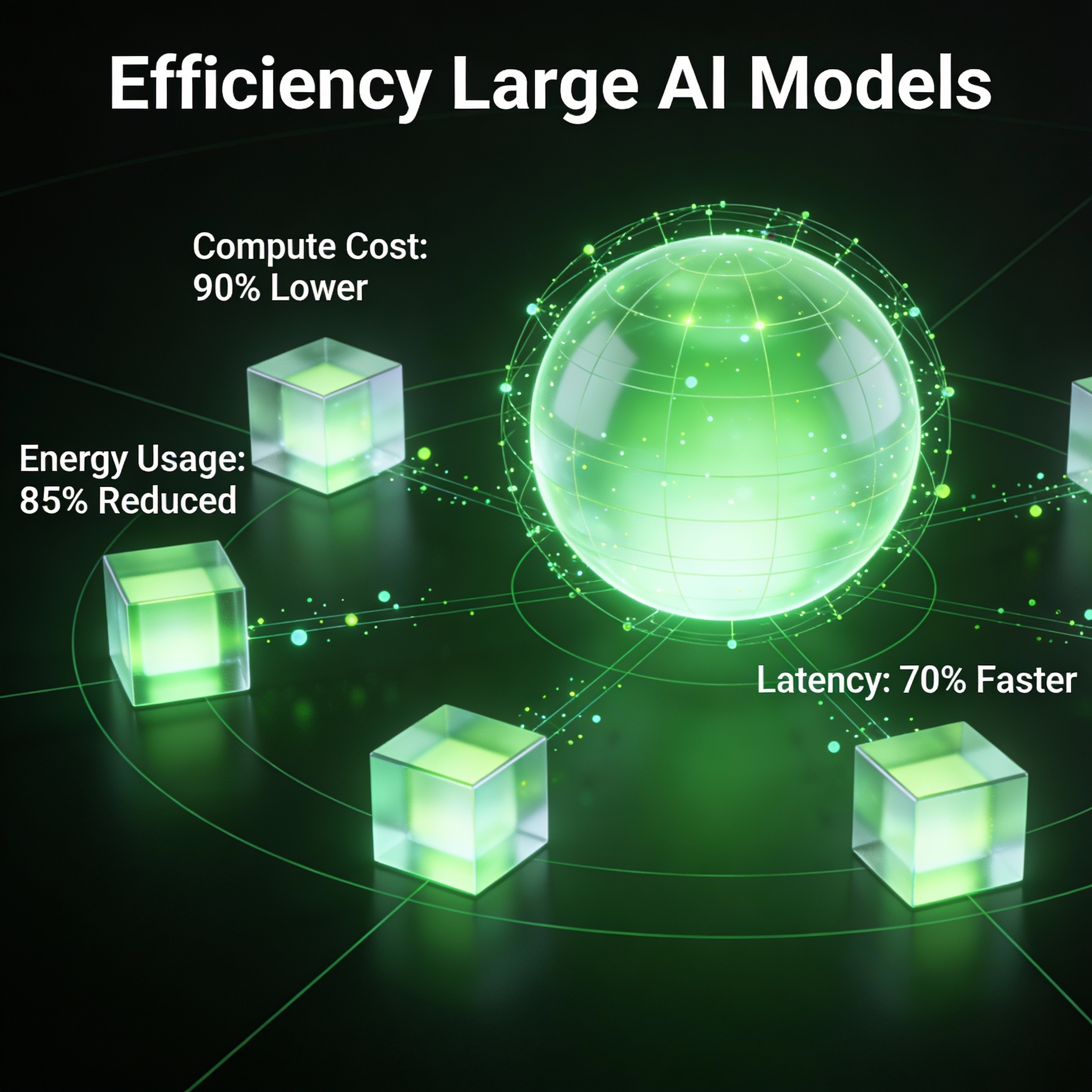
P.16The AI industry is pivoting from massive models to efficient SLMs offering 10-30x reductions in latency and cost. Learn why smaller is better and how to leverage SLMs in your applications.