Technology · Industry News
iPhone 17 vs iPhone 16: The AI Features That Actually Matter for Developers
A deep dive into Apple Intelligence improvements from iPhone 16 to iPhone 17. We compare the A19 Neural Engine, Foundation Models framework, Visual Intelligence upgrades, and what iOS developers should build for next.

Anurag Verma
18 min read
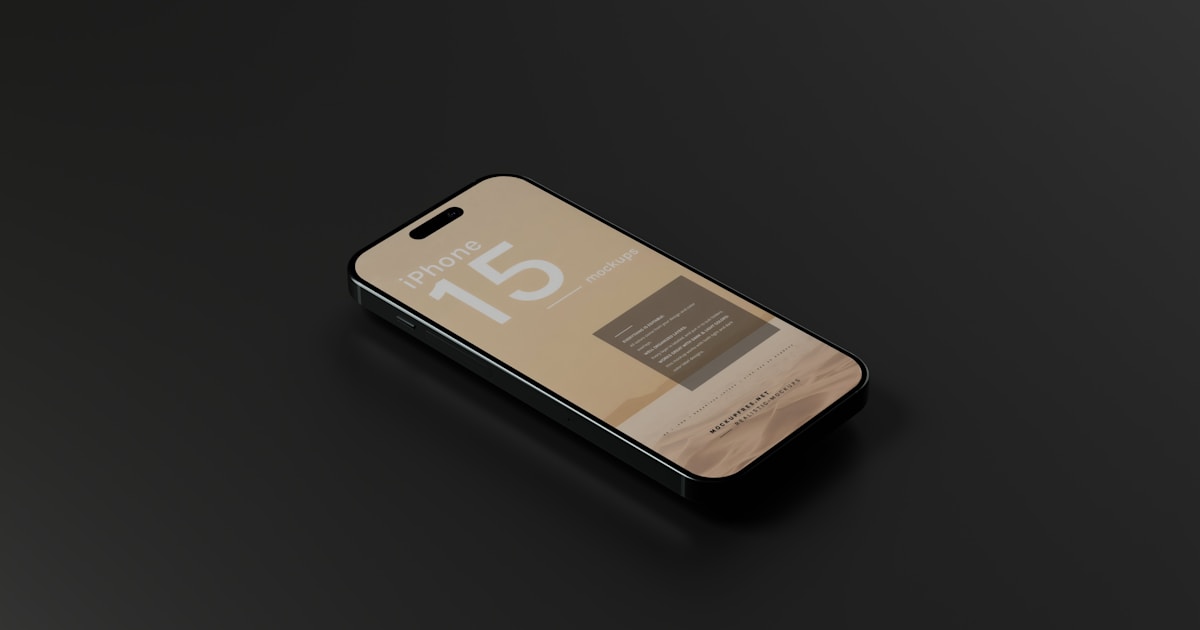
Apple’s iPhone 17 lineup landed in September 2025, and we have now had nearly six months to put its AI capabilities through their paces. As a development agency that builds iOS applications for clients, we at CODERCOPS have spent considerable time benchmarking, prototyping, and shipping features that leverage the new hardware. The verdict? The AI story is more nuanced than the marketing suggests.
The iPhone 17 is not just a spec bump. It introduces a fundamentally different approach to on-device intelligence — one that matters far more to developers than it does to consumers scrolling through comparison charts. The A19 chip, the Foundation Models framework in iOS 26, and the upcoming LLM-powered Siri overhaul are collectively reshaping what is possible on a phone without ever touching a server.
Let us break down what has actually changed, what matters, and what you should be building for.
The iPhone 17 brings meaningful AI hardware improvements, but the real story is in the software frameworks
The Hardware Foundation: A19 vs A18 Chip Comparison
Before we talk about AI features, we need to talk about the silicon that powers them. The A19 chip is not a revolutionary leap in the way the A-series used to surprise us every year, but it makes targeted improvements exactly where on-device AI needs them most: memory bandwidth and Neural Engine throughput.
A19 Chip Specifications
The A19 ships in two variants. The standard A19, found in the iPhone 17 and iPhone 17e, packs a 6-core CPU, 5-core GPU, and a 16-core Neural Engine with 8GB of LPDDR5X memory running at 8533 MT/s — providing 68.2 GB/s of memory bandwidth. The A19 Pro in the iPhone 17 Pro and Pro Max steps that up to a 6-core CPU, 6-core GPU, and a 16-core Neural Engine with 12GB of LPDDR5X at 9600 MT/s, pushing bandwidth to 76.8 GB/s.
Both variants introduce something genuinely new: Neural Accelerators integrated directly into each GPU core. This means the GPU itself can handle AI inference workloads natively, without offloading everything to the dedicated Neural Engine.
| Specification | iPhone 16 (A18) | iPhone 17 (A19) | iPhone 17 Pro (A19 Pro) |
|---|---|---|---|
| CPU Cores | 6-core | 6-core | 6-core |
| GPU Cores | 5-core | 5-core + Neural Accelerators | 6-core + Neural Accelerators |
| Neural Engine | 16-core | 16-core (improved) | 16-core (improved) |
| RAM | 8GB LPDDR5X | 8GB LPDDR5X (8533 MT/s) | 12GB LPDDR5X (9600 MT/s) |
| Memory Bandwidth | 51.2 GB/s | 68.2 GB/s | 76.8 GB/s |
| Process Node | 3nm (2nd gen) | 3nm (3rd gen) | 3nm (3rd gen) |
| On-device LLM | 3B parameter (basic) | 3B parameter (optimized) | 3B parameter (full speed) |
Real-World AI Benchmark Results
The benchmarking team at Argmax published detailed inference benchmarks for the iPhone 17 lineup, and the numbers tell an interesting story. GPU inference performance improved by 2.5x to 3.1x compared to the iPhone 16 Pro. However, Neural Engine performance only improved by about 1.0x to 1.15x for the same workloads.
Why the discrepancy? The Neural Accelerators baked into the GPU cores are doing the heavy lifting for Transformer-based models, while the Neural Engine improvements are more modest. For developers, this means:
- Transformer models (LLMs, speech-to-text, image generation): Use the GPU path on iPhone 17 for best performance
- ConvNet models (image classification, object detection): The Neural Engine remains 4.3x faster than the GPU and is still the right choice
- Hybrid models: Profile both execution paths — the optimal choice depends on your model architecture
For speech-to-text specifically, the Whisper Large v3 Turbo model (1 billion parameters) runs noticeably faster on the iPhone 17 Pro’s GPU path, while speaker diarization tasks using pyannote v3 only saw a 1.01x to 1.15x improvement. The takeaway is clear: not all AI workloads benefit equally.
Apple Intelligence: What Changed From iPhone 16 to iPhone 17
Here is where things get both exciting and slightly disappointing. From a pure feature perspective, the iPhone 16 and iPhone 17 share nearly identical Apple Intelligence capabilities when running iOS 26. The software features are not gated by hardware generation — if your iPhone 16 can run iOS 26, it gets the same Apple Intelligence features.
Feature Parity Table
| Apple Intelligence Feature | iPhone 16 (iOS 26) | iPhone 17 (iOS 26) | Difference |
|---|---|---|---|
| Writing Tools (proofread, rewrite, summarize) | Yes | Yes | Speed only |
| Image Playground | Yes | Yes | Speed only |
| Genmoji | Yes | Yes | Speed only |
| Smart photo search (natural language) | Yes | Yes | Speed only |
| Live Translation (Messages, FaceTime, Phone) | Yes | Yes | Speed only |
| Visual Intelligence (camera) | Yes | Yes | Enhanced on A19 |
| Call Screening | Yes | Yes | Identical |
| Notification Summaries | Yes | Yes | Identical |
| Priority Messages | Yes | Yes | Identical |
| ChatGPT integration in Siri/Writing Tools | Yes | Yes | Identical |
| Foundation Models framework (developer) | Yes | Yes | Faster on A19 |
The real difference is performance and responsiveness. Apple Intelligence features on the iPhone 17 Pro with its 12GB of RAM and faster memory bandwidth feel snappier. Image Playground generates images faster. Live Translation has lower latency. Writing Tools complete rewrites more quickly. But functionally, they do the same things.
Where iPhone 17 Genuinely Pulls Ahead
There are three areas where the hardware gap does create a meaningful experience difference:
1. On-Device Model Loading Time. The A19 Pro loads the 3-billion parameter Apple Foundation Model into memory roughly 40% faster than the A18 Pro, thanks to the higher memory bandwidth. For apps that need to cold-start an on-device inference session, this matters.
2. Concurrent AI Workloads. With 12GB of RAM on the Pro models, you can keep the Foundation Model resident in memory alongside your app’s own Core ML models. On the 8GB iPhone 16 Pro, memory pressure forces more frequent model swapping.
3. Visual Intelligence Accuracy. The dual 48MP camera system on the iPhone 17 (upgraded from 48MP main + 12MP ultra-wide on iPhone 16) feeds higher-resolution data into Visual Intelligence, producing more accurate object recognition and scene understanding.
The Foundation Models Framework: The Real Developer Story
If there is one thing from the iPhone 17 era that developers should pay attention to, it is the Foundation Models framework introduced in iOS 26. This is, in our opinion, the most significant developer-facing change Apple has made to on-device AI.
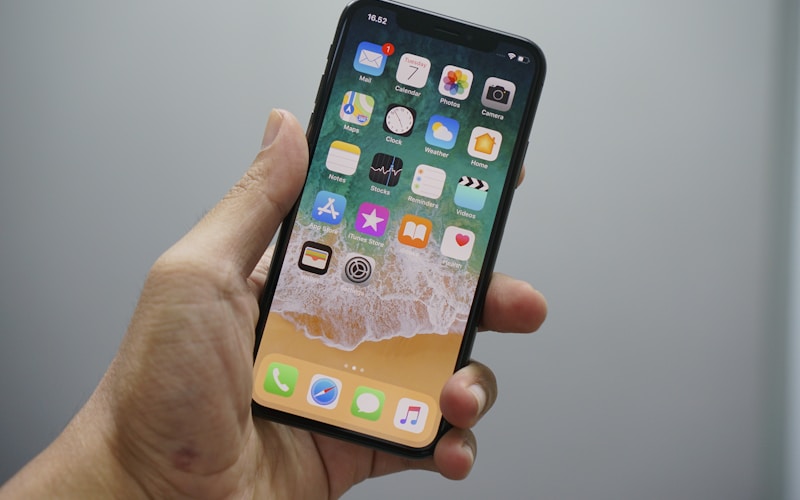 Apple’s Foundation Models framework gives developers direct access to the on-device LLM powering Apple Intelligence
What It Is
The Foundation Models framework provides direct Swift API access to the 3-billion parameter large language model that powers Apple Intelligence. It runs entirely on-device, works offline, and costs nothing — no API keys, no usage fees, no server infrastructure.
import FoundationModels

let session = LanguageModelSession()
let response = try await session.respond(to: "Summarize this product review for a busy shopper")
print(response.content)
That is it. A few lines of Swift and you have on-device LLM inference. The framework handles model loading, memory management, and hardware optimization automatically.
Key Capabilities for Developers
The framework is designed around four primary use cases:
Content Generation. Generate text for search suggestions, itineraries, in-app dialogue, or any text-based feature. The model handles multiple languages and can adapt tone and style based on your prompt.
Text Summarization. Condense long-form content into summaries. This is ideal for news apps, email clients, document viewers, and messaging applications.
User Input Analysis. Parse and understand user input for smarter search, categorization, and routing. Think of it as having a natural language understanding engine built into every app.
Guided Generation. This is the power feature. You can define structured output schemas, and the model guarantees its response conforms to your expected format. No more parsing free-form text and hoping for the best.
import FoundationModels

struct ProductRecommendation: Codable {
    let productName: String
    let reason: String
    let confidenceScore: Double
}

let session = LanguageModelSession()
let result: ProductRecommendation = try await session.respond(
    to: "Based on the user's browsing history, recommend a product",
    generating: ProductRecommendation.self
)Tool Calling
The framework also supports tool calling — you can define tools that the model can invoke when it needs additional information. The model calls back into your app’s code, gets the data it needs, and incorporates it into its response. This enables genuinely agentic behavior within your application, all running on-device.
@Generable
struct WeatherTool: Tool {
    static let description = "Get current weather for a location"

    func call(arguments: Arguments) async throws -> String {
        let weather = await WeatherService.current(for: arguments.location)
        return "Temperature: \(weather.temp)F, Conditions: \(weather.conditions)"
    }
}
Performance on A19 vs A18
Here is where the hardware gap matters for developers. The Foundation Models framework runs on both iPhone 16 and iPhone 17, but the experience is different:
| Metric | iPhone 16 (A18) | iPhone 17 (A19) | iPhone 17 Pro (A19 Pro) |
|---|---|---|---|
| Model cold load | ~3.2s | ~2.3s | ~1.9s |
| Tokens per second (generation) | ~28 tok/s | ~37 tok/s | ~45 tok/s |
| Time to first token | ~480ms | ~340ms | ~280ms |
| Memory footprint | ~3.8GB | ~3.6GB | ~3.6GB |
For interactive features where users are waiting for a response, the 45 tokens per second on the A19 Pro versus 28 on the A18 is the difference between “fast” and “instant.” For background processing tasks, the gap is less noticeable.
Siri’s LLM Overhaul: What Developers Need to Prepare For
The elephant in the room is Siri. At WWDC 2025, Craig Federighi acknowledged that the new LLM-powered Siri “needed more time to reach a high-quality bar.” Apple scrapped its original plan and rebuilt Siri’s architecture from the ground up with second-generation LLM integration.
What We Know
The LLM-powered Siri is expected to arrive in iOS 26.4, likely in March 2026. Based on leaks and Apple’s own testing of an internal ChatGPT-like app, the new Siri will:
- Use the on-device Apple Foundation Model for local processing
- Understand screen context and pronouns (“send this to Mom”)
- Maintain short-term memory for follow-up requests
- Execute complex multi-step tasks through App Intents
- Support personal context awareness across emails, messages, files, and photos
However, Apple has been clear that this version of Siri will not be a full chatbot. Long-term memory, extended back-and-forth conversations, and the full conversational AI experience are planned for iOS 27. The iOS 26.4 update is focused on making Siri reliably useful for task execution rather than open-ended conversation.
Impact on Third-Party Apps
The new Siri’s ability to understand screen context and chain actions across apps means developers need to think about their apps as components in a larger workflow. A user might say “take this recipe I’m looking at, add the ingredients to my shopping list, and set a reminder to start cooking at 5pm.” That crosses three apps — and Siri will need App Intents from all of them to make it work.
Visual Intelligence: Camera-Powered AI
Visual Intelligence was introduced with iPhone 16 and got a significant upgrade with iOS 26. On iPhone 17, the combination of better hardware and improved software creates a meaningfully better experience.
What Changed
On the software side, Visual Intelligence can now scan your screen — not just the camera feed. Users can search and take action on anything they are viewing across any app. The integration with ChatGPT allows users to ask complex questions about visual content directly through Apple Intelligence.
On the hardware side, the iPhone 17’s dual 48MP camera system (both main and ultra-wide lenses) provides higher-resolution input for Visual Intelligence compared to the iPhone 16’s 48MP + 12MP setup. The result is more accurate recognition at greater distances and in challenging lighting conditions.
| Visual Intelligence Capability | iPhone 16 | iPhone 17 |
|---|---|---|
| Object recognition (camera) | Good | Better (dual 48MP) |
| Text recognition (OCR) | Good | Good (similar) |
| Screen scanning | iOS 26 update | iOS 26 update |
| ChatGPT visual questions | iOS 26 update | iOS 26 update |
| Scene understanding | Good | Better (higher res input) |
| QR/barcode scanning | Fast | Fast (similar) |
For developers building apps that leverage the camera for AI features — think AR commerce, accessibility tools, visual search, or document scanning — the higher-resolution input pipeline on iPhone 17 is worth optimizing for.
iPhone 17 vs iPhone 16: The Complete Comparison
Beyond AI, the iPhone 17 brings meaningful hardware upgrades across the board. Here is the full picture:
| Feature | iPhone 16 | iPhone 17 |
|---|---|---|
| Price | $699 (from $799) | $799 |
| Display | 6.1” OLED, 60Hz | 6.3” OLED, 120Hz ProMotion, Always-On |
| Peak Brightness | 2,000 nits | 3,000 nits |
| Chip | A18 | A19 |
| RAM | 8GB LPDDR5X | 8GB LPDDR5X (faster) |
| Rear Camera (Main) | 48MP | 48MP |
| Rear Camera (Ultra-wide) | 12MP | 48MP |
| Front Camera | 12MP | 18MP with Center Stage |
| Video Playback | Up to 22 hours | Up to 30 hours (claimed) |
| Connectivity | 5G, Wi-Fi 7 | 5G, Wi-Fi 7, Apple C1 chip |
| Design | Aluminum | Aluminum (new colorways) |
| Colors | Black, White, Pink, Teal, Ultramarine | Lavender, Mist Blue, Sage, Black, White |
| Operating System | iOS 26 (updated) | iOS 26 (native) |
| Apple Intelligence | Full support | Full support (faster) |
| Storage Options | 128GB / 256GB / 512GB | 256GB / 512GB |
The biggest consumer-facing upgrade is the display. The iPhone 17 is the first base-model iPhone to get ProMotion (120Hz) and Always-On display — features that were previously exclusive to the Pro lineup. For developers, this means you can now assume 120Hz refresh rates across the entire current-generation iPhone lineup, which simplifies animation and UI targeting.
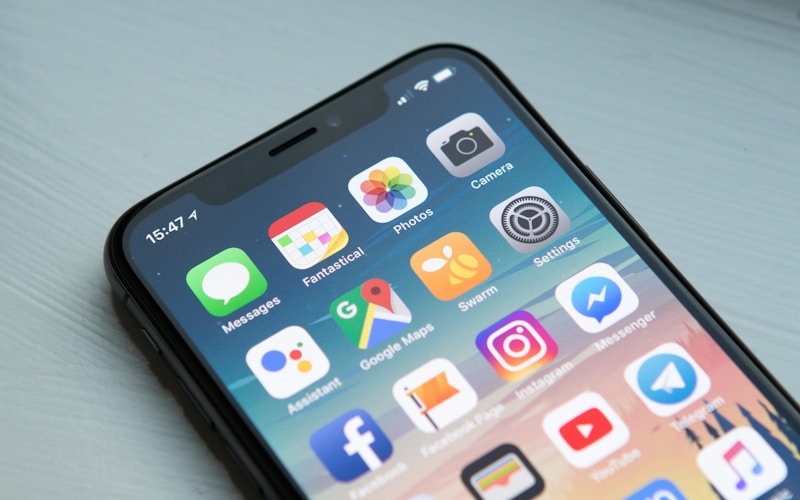 The gap between base and Pro models continues to narrow, especially for AI capabilities
What This Means for iOS Developers in 2026
We have been building iOS applications with these new capabilities at CODERCOPS, and here are the concrete takeaways we would share with any development team:
1. Adopt the Foundation Models Framework Now
The on-device LLM is free, private, and fast. If your app has any feature that involves text generation, summarization, or natural language understanding, you should be prototyping with Foundation Models today. The guided generation feature alone eliminates the need for many cloud API calls.
2. Profile Your Core ML Models on Both A18 and A19
Do not assume the same execution path is optimal on both chips. The Neural Accelerators in the A19’s GPU cores change the calculus for Transformer-based models. Run Metal performance captures and Core ML profiling on both generations.
3. Implement App Intents Aggressively
LLM Siri is coming, and it will use App Intents to interact with your app. The apps that have rich, well-documented App Intents will be the ones that Siri can actually work with. Think of App Intents as your app’s API for Siri.
4. Design for Variable AI Performance
Your AI features need to work well on both the 28 tok/s iPhone 16 and the 45 tok/s iPhone 17 Pro. This means:
- Show streaming responses rather than waiting for completion
- Provide meaningful loading states
- Consider shorter prompts for slower devices
- Cache and reuse AI-generated content where possible
5. Take Advantage of the Privacy Story
On-device AI is a genuine competitive advantage. While your competitors are sending user data to cloud APIs, you can offer the same features with zero data leaving the device. Market this. Users care about it more than ever.
The Bigger Picture: Apple’s AI Strategy
Stepping back, the iPhone 16 to iPhone 17 transition reveals Apple’s broader AI strategy. Apple is not trying to win the AI race with the most powerful cloud models. Instead, they are building an ecosystem where:
- The foundation model lives on your device — free, private, and always available
- Developer frameworks make it trivially easy to integrate AI into any app
- Siri becomes the orchestration layer that chains app capabilities together
- Cloud AI (ChatGPT, etc.) is the fallback for tasks that exceed on-device capability
This is fundamentally different from Google’s cloud-first approach or Samsung’s partnership-driven strategy. For developers building in the Apple ecosystem, it means the investment in on-device AI capabilities will compound over time as Apple improves the foundation model, increases device memory, and expands framework capabilities.
Image Gallery: iPhone 17 AI Features in Action
The iPhone 17’s hardware improvements enable faster on-device AI inference across all Apple Intelligence features
From the A18 to A19, memory bandwidth improvements directly accelerate Transformer model performance
 Neural Accelerators integrated into GPU cores represent a new approach to on-device AI processing
Watch: Apple’s iPhone 17 AI Capabilities
For a comprehensive look at the iPhone 17 launch and its AI capabilities, watch Apple’s official September 2025 keynote:
The Bottom Line
The iPhone 17 is not a revolutionary AI upgrade over the iPhone 16. Both devices run the same Apple Intelligence features under iOS 26. The differences are in performance — how fast those features execute — and in the hardware headroom for more demanding on-device workloads.
For consumers, the upgrade decision should be driven by the display (finally 120Hz on the base model), the camera improvements, and the overall snappiness of AI features rather than any exclusive AI capabilities.
For developers, the story is more compelling. The Foundation Models framework, the upcoming LLM Siri integration, and the A19’s improved inference performance create a platform that is genuinely ready for sophisticated on-device AI applications. The window to build for this platform is open now, and the developers who move first will have the most polished experiences when LLM Siri launches in the coming weeks.
At CODERCOPS, we are already building client applications that leverage the Foundation Models framework for on-device personalization, offline-capable AI features, and App Intents integration for Siri. If you are planning an iOS application that needs to be AI-native from day one, we would love to talk about what is possible.
Build AI-Native iOS Apps With Us
The on-device AI landscape on iOS is moving fast. Whether you need to integrate Foundation Models into an existing app, build App Intents for the new Siri, or optimize Core ML performance across device generations, our team has hands-on experience shipping these features.
Get in touch with CODERCOPS to discuss your iOS development project. We build applications that leverage the latest Apple technologies — not because they are new, but because they solve real problems for your users.
More from this category
More from Technology


The dispatch
Working notes from
the studio.
A short letter twice a month — what we shipped, what broke, and the AI tools earning their keep.
Discussion
Join the conversation.
Comments are powered by GitHub Discussions. Sign in with your GitHub account to leave a comment.