Technology · Engineering
Digital Healthcare Platforms: The $500B Developer Opportunity in 2026
From FHIR APIs and telemedicine to AI diagnostics and remote patient monitoring, the digital health market is creating massive opportunities for software developers. Here's where to build.

Anurag Verma
21 min read

Healthcare is undergoing a software transformation that rivals what fintech did to banking a decade ago. Except the stakes are higher, the regulatory landscape is stricter, and the market is significantly larger. In 2026, the global digital health market has crossed $490 billion and is projected to surpass $2.3 trillion by 2034. For software developers, this is not a niche vertical — it is one of the largest addressable markets on the planet.
 The convergence of software, AI, and healthcare is creating unprecedented demand for developers who understand both code and clinical workflows
At CODERCOPS, we have been watching healthcare technology evolve from clunky legacy systems into modern, API-driven platforms. The shift accelerated during the pandemic, but 2026 is the year where digital health infrastructure is becoming permanent, standardized, and deeply integrated into how care is actually delivered. That means developers are no longer building experimental prototypes — they are building production systems that doctors, nurses, and patients depend on every day.
This post breaks down the specific areas where developers can make an impact, the technology stacks involved, and the practical steps to enter this space.
The Market: By the Numbers
Before diving into the technical details, here is a snapshot of where the digital health market stands in 2026:
| Segment | Market Size (2026) | Projected (2034) | CAGR |
|---|---|---|---|
| Global Digital Health | $491.6B | $2,351B | 21.6% |
| U.S. Digital Health | $179.8B | $266.5B (2035) | ~8% |
| Mental Health Apps | $9.5B | $32.1B (2034) | 18% |
| Remote Patient Monitoring | $71.4B | $238B (2033) | 18.5% |
| Telehealth Services | $115.2B | $432B (2034) | 20.1% |
| AI in Healthcare | $32.2B | $164.1B (2034) | 22.4% |
The numbers are large, but what matters for developers is the structural shift underneath them. Healthcare organizations are moving from monolithic, vendor-locked systems to modular, API-first architectures. This is where modern software development skills become directly valuable.
FHIR APIs: The Backbone of Modern Healthcare Development
If you are going to build anything in healthcare, you need to understand FHIR (Fast Healthcare Interoperability Resources). It is the standard that has finally brought REST APIs to healthcare data exchange, replacing decades of proprietary HL7 v2 message formats and brittle point-to-point integrations.
Why FHIR Matters Now
FHIR is not new — HL7 published the first draft in 2014. What has changed is that regulation has made it mandatory. The 21st Century Cures Act and ONC rules require healthcare organizations to expose patient data through standardized FHIR APIs. By January 2027, payers must implement FHIR APIs for provider data sharing of claims and encounter data.
The result: every major EHR vendor — Epic, Oracle Health (formerly Cerner), MEDITECH, Allscripts — now exposes FHIR R4 endpoints. And 63% of developers working with FHIR report being able to build functional integrations in under one week, a timeline that was impossible with legacy HL7 v2 approaches.
FHIR API Code Example
Here is a practical example of querying a FHIR R4 server for patient data using the SMART on FHIR protocol:
import FHIR from 'fhirclient';

// Initialize a SMART on FHIR client (OAuth2-based authorization)
const client = await FHIR.oauth2.init({
  clientId: 'your-registered-app-id',
  scope: 'launch/patient patient/Patient.read patient/Observation.read',
  redirectUri: 'https://your-app.com/callback',
  iss: 'https://fhir.epic.com/interconnect-fhir-oauth/api/FHIR/R4'
});

// Fetch the current patient resource
const patient = await client.patient.read();
console.log(`Patient: ${patient.name[0].given[0]} ${patient.name[0].family}`);

// Query recent vital signs (blood pressure, heart rate, etc.)
const vitals = await client.request(
  `Observation?patient=${patient.id}&category=vital-signs&_sort=-date&_count=10`,
  { resolveReferences: ['subject'] }
);

// Process the FHIR Bundle response
interface FHIRObservation {
  resource: {
    code: { coding: Array<{ display: string }> };
    valueQuantity?: { value: number; unit: string };
    effectiveDateTime: string;
  };
}

vitals.entry?.forEach((entry: FHIRObservation) => {
  const obs = entry.resource;
  const name = obs.code.coding[0].display;
  const value = obs.valueQuantity
    ? `${obs.valueQuantity.value} ${obs.valueQuantity.unit}`
    : 'N/A';
  const date = new Date(obs.effectiveDateTime).toLocaleDateString();
  console.log(`${date} - ${name}: ${value}`);
});
// Sample output:
// Patient: Jane Smith
// 02/28/2026 - Blood Pressure: 120/80 mmHg
// 02/28/2026 - Heart Rate: 72 bpm
// 02/25/2026 - Body Temperature: 98.6 °F
// 02/20/2026 - Oxygen Saturation: 98 %EHR Platform API Comparison
If you are building integrations, understanding the differences between EHR vendor API ecosystems is essential:
| Feature | Epic (FHIR on Epic) | Oracle Health (Ignite) | MEDITECH Expanse | Allscripts (Veradigm) |
|---|---|---|---|---|
| FHIR Version | R4 (full) | R4 (full), DSTU2 deprecated | R4 | R4 |
| Developer Portal | fhir.epic.com | code.cerner.com | developer.meditech.com | developer.veradigm.com |
| App Marketplace | Epic App Market | Oracle Health Marketplace | MEDITECH App Market | Veradigm Network |
| Auth Protocol | SMART on FHIR / OAuth 2.0 | SMART on FHIR / OAuth 2.0 | SMART on FHIR | OAuth 2.0 |
| Sandbox Access | Free | Free | Free | Free |
| Bulk Data API | Yes (FHIR Bulk Data) | Yes | Limited | Yes |
| Webhooks | Subscriptions API | Event-driven notifications | Limited | Webhooks |
| Market Share (US) | ~38% of hospitals | ~25% of hospitals | ~16% of hospitals | ~10% of hospitals |
| Integration Philosophy | Epic-first network, then external | Integration-first, open approach | Midmarket focused | Ambulatory focused |
| AI Features (2026) | Gen-AI messaging, note-taking deployed at hundreds of hospitals | Overhauling EHR for AI readiness | AI-assisted workflows | Clinical analytics |
Telemedicine Platform Development
Telemedicine is no longer the emergency workaround it was during COVID. It is now a permanent care delivery channel, and 2026 platforms reflect that maturity. Most production telemedicine systems in 2026 are hybrid: web-first for providers and admin staff, mobile-first for patients, with shared design systems across channels.
Architecture Pattern
The dominant architecture for telemedicine platforms in 2026 follows an API-first design:
Telemedicine Platform Architecture
├── Patient Mobile App (React Native / Flutter)
│   ├── Video consultation (WebRTC / Twilio / Vonage)
│   ├── Symptom checker (AI chatbot)
│   ├── Appointment scheduling
│   ├── Prescription & pharmacy integration
│   └── Secure messaging (E2E encrypted)
│
├── Provider Web Portal (React / Next.js)
│   ├── Patient queue management
│   ├── EHR integration (FHIR)
│   ├── AI-assisted clinical notes
│   ├── E-prescribing (NCPDP SCRIPT)
│   └── Billing & coding (CPT/ICD-10)
│
├── Backend Services (Node.js / Python / Java Spring Boot)
│   ├── API Gateway (Kong / AWS API Gateway)
│   ├── Auth Service (OAuth 2.0 + MFA)
│   ├── Scheduling Service
│   ├── Video Service (WebRTC signaling)
│   ├── Notification Service (push, SMS, email)
│   └── Analytics & Reporting
│
├── Data Layer
│   ├── PostgreSQL (structured clinical data)
│   ├── MongoDB (unstructured notes, chat logs)
│   ├── Redis (session management, caching)
│   └── S3 / GCS (medical images, documents)
│
└── Infrastructure (HIPAA-Compliant Cloud)
    ├── AWS GovCloud / Azure Healthcare / GCP Healthcare API
    ├── Kubernetes (container orchestration)
    ├── Terraform (infrastructure as code)
    └── Datadog / Splunk (monitoring + audit logging)
Technology Stack Recommendations
For developers entering telemedicine, the recommended stacks in 2026 are:
Frontend: React Native for cross-platform mobile (patient app) + Next.js for the provider web portal. Flutter is gaining ground for teams that want a single codebase. The key is a shared component library and design token system to keep the experience consistent across channels.
Backend: Python with Django is the most common choice for healthcare backends due to its robust security features and extensive healthcare-specific libraries (like fhirclient, python-hl7). Node.js with Express or Fastify is preferred for real-time features like video signaling and chat. Java Spring Boot remains the choice for enterprise-scale implementations.
Database: PostgreSQL for structured data (patient records, appointments, billing). The HIPAA compliance story for PostgreSQL is well-established. MongoDB for unstructured data like clinical notes, chat histories, and AI model outputs.
Cloud: AWS, Azure, and GCP all offer HIPAA-eligible services, but you must sign a Business Associate Agreement (BAA) and configure services according to the shared responsibility model. AWS and Azure have the most mature healthcare-specific services.
The cost of building a custom telemedicine platform ranges from $59,000 to $149,000 for an MVP, depending on feature scope and regulatory requirements.
AI Diagnostics: Where ML Meets Clinical Practice
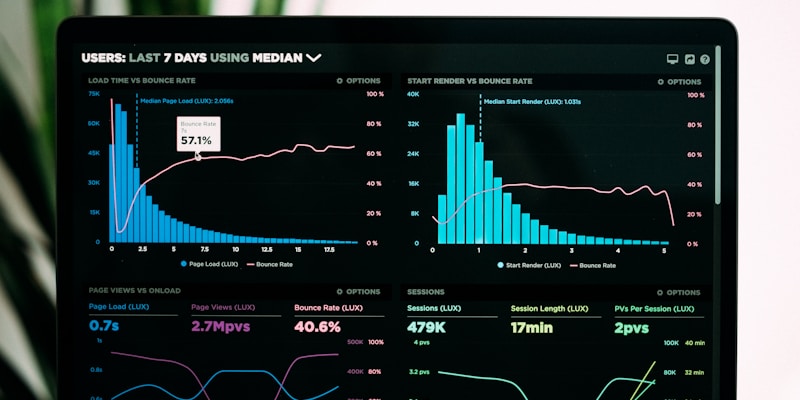 AI diagnostics have moved from research papers to production systems with over 1,000 FDA-cleared tools now available
This is the segment generating the most excitement — and the most developer demand. In 2026, over 1,000 AI-powered tools are FDA-cleared, and the conversation has shifted from “Can AI help with diagnostics?” to “How do we integrate it into clinical workflows at scale?”
Key Application Areas for Developers
Medical Imaging AI: The most mature area. Convolutional neural networks and vision transformers analyze radiology scans, pathology slides, and dermatological images. Developers are needed to build the integration layer between AI models and existing PACS (Picture Archiving and Communication Systems), train on institution-specific datasets, and build the user interfaces that radiologists actually use.
Clinical Decision Support: AI systems that analyze patient data (labs, vitals, medications, history) and surface recommendations to clinicians. These systems integrate with EHRs through FHIR APIs and CDS Hooks, a standard for embedding decision support directly into EHR workflows.
Natural Language Processing: Processing unstructured clinical notes, extracting coded diagnoses, and generating clinical summaries. Google’s MedGemma and similar multimodal models are available as open-weight models that developers can fine-tune for specific clinical use cases.
Triage and Symptom Assessment: AI-powered chatbots that handle initial patient intake, assess symptom severity, and route patients to the appropriate care setting. These are high-volume systems that require solid software engineering — not just ML expertise.
Developer Resources
Google’s Health AI Developer Foundations (HAI-DEF) provides open-weight models including MedGemma for medical imaging and text comprehension, and TxGemma for therapeutics development. These are designed to be fine-tuned by developers for specific clinical applications.
# Example: Using MedGemma for medical text comprehension
# via Google Cloud Vertex AI
from vertexai.generative_models import GenerativeModel

model = GenerativeModel("medgemma-27b")

# Clinical note summarization
clinical_note = """
Patient presents with 3-day history of progressive dyspnea,
productive cough with yellowish sputum. Temperature 38.9°C,
HR 102, RR 24, SpO2 93% on room air. Bilateral crackles on
auscultation. CXR shows bilateral infiltrates consistent with
pneumonia. Started on ceftriaxone and azithromycin per CAP protocol.
"""

response = model.generate_content(
    f"""Extract structured data from this clinical note.
    Return JSON with: diagnosis, symptoms, vitals, treatment_plan.

    Note: {clinical_note}"""
)

print(response.text)
# Output: structured JSON with extracted clinical entitiesRemote Patient Monitoring: The Infrastructure Play
 RPM has evolved from an experimental add-on to foundational healthcare infrastructure in 2026
Remote Patient Monitoring (RPM) has had a breakout year. CMS finalized new CPT codes that went into effect January 1, 2026, making RPM more financially viable for healthcare providers than ever. The new code structure (including CPT 99445 for 2-15 days of measurements) has removed billing barriers that previously held adoption back.
By 2026, RPM is no longer an optional innovation. It is embedded infrastructure across hospitals, nursing homes, corporate wellness programs, senior housing, and hospital-at-home programs. More than 60% of RPM platforms now use AI-driven analytics.
What Developers Build in RPM
RPM systems have four main layers that developers work on:
1. Device Integration Layer The most technically challenging piece. RPM platforms must reliably collect data from blood pressure monitors, glucose meters, pulse oximeters, ECG devices, weight scales, and consumer wearables (Apple Watch, Fitbit, Garmin). Protocols include Bluetooth Low Energy (BLE), Continua Health Alliance standards, Apple HealthKit, and Google Health Connect APIs.
// Example: Integrating Apple HealthKit data in a React Native RPM app
import AppleHealthKit, {
  HealthKitPermissions,
  HealthValue,
} from 'react-native-health';

const permissions: HealthKitPermissions = {
  permissions: {
    read: [
      AppleHealthKit.Constants.Permissions.HeartRate,
      AppleHealthKit.Constants.Permissions.BloodPressureSystolic,
      AppleHealthKit.Constants.Permissions.BloodPressureDiastolic,
      AppleHealthKit.Constants.Permissions.OxygenSaturation,
      AppleHealthKit.Constants.Permissions.BloodGlucose,
    ],
    write: [],
  },
};

AppleHealthKit.initHealthKit(permissions, (err: string) => {
  if (err) {
    console.error('HealthKit initialization failed:', err);
    return;
  }

  // Query heart rate readings from the last 24 hours
  const options = {
    startDate: new Date(
      Date.now() - 24 * 60 * 60 * 1000
    ).toISOString(),
    ascending: false,
    limit: 50,
  };

  AppleHealthKit.getHeartRateSamples(
    options,
    (err: string, results: HealthValue[]) => {
      if (err) return;

      // Transform HealthKit data to FHIR Observation resources
      const fhirObservations = results.map((sample) => ({
        resourceType: 'Observation',
        status: 'final',
        category: [{
          coding: [{
            system: 'http://terminology.hl7.org/CodeSystem/observation-category',
            code: 'vital-signs',
          }],
        }],
        code: {
          coding: [{
            system: 'http://loinc.org',
            code: '8867-4',
            display: 'Heart rate',
          }],
        },
        valueQuantity: {
          value: sample.value,
          unit: 'beats/minute',
          system: 'http://unitsofmeasure.org',
          code: '/min',
        },
        effectiveDateTime: sample.startDate,
      }));

      // Send to FHIR-compliant backend
      syncToServer(fhirObservations);
    }
  );
});
2. Data Pipeline and Analytics Streaming data from thousands of patients to a central platform, applying rules engines and ML models to detect anomalies, and generating alerts for clinical staff. This is a classic data engineering challenge: Apache Kafka or AWS Kinesis for streaming, time-series databases like TimescaleDB or InfluxDB for storage, and Python-based ML pipelines for anomaly detection.
3. Clinical Dashboard The provider-facing interface where care teams monitor patient populations, triage alerts, and take action. These dashboards must surface the right information at the right time without overwhelming clinicians with noise. React-based frontends with real-time WebSocket updates are the standard.
4. Patient-Facing App The mobile application where patients view their readings, receive medication reminders, communicate with their care team, and complete health assessments. Simplicity and accessibility (WCAG compliance) are critical since many RPM patients are elderly or have limited technology experience.
The Business Case
RPM generates $120-$150 per patient per month (PPPM) in revenue for healthcare providers and typically breaks even within 2-3 months. For developers and agencies building RPM solutions, this recurring revenue model means long-term engagement contracts rather than one-off builds.
Mental Health Applications: The Fastest-Growing Segment
The mental health app market was worth $7.23 billion in 2024 and is projected to reach $32.05 billion by 2034 — an 18% CAGR that outpaces most other digital health segments. The convergence of AI-powered therapy assistants, teletherapy platforms, and employer-sponsored mental wellness programs is driving demand.
What Makes Mental Health Apps Different
From a development perspective, mental health applications have unique requirements:
Real-time crisis detection. AI chatbots and journaling features must detect language patterns that suggest self-harm risk and route users to crisis resources (988 Suicide & Crisis Lifeline) immediately. This is not a nice-to-have feature — it is an ethical and legal requirement.
Clinical validation. Mental health apps increasingly need to demonstrate clinical efficacy through peer-reviewed studies. Features like CBT (Cognitive Behavioral Therapy) exercises, mood tracking algorithms, and therapeutic chatbots must be designed in collaboration with licensed mental health professionals.
Privacy at a higher bar. Mental health data is among the most sensitive categories of health information. Beyond standard HIPAA compliance, many jurisdictions have additional protections for behavioral health records under 42 CFR Part 2.
On-device processing. For maximum privacy, leading mental health apps in 2026 are moving sensitive NLP processing on-device using Core ML (iOS) or TensorFlow Lite (Android), so that raw therapy session data never leaves the user’s phone.
Technology Considerations
For mental health app development in 2026:
- React Native or Flutter for cross-platform mobile development with strong encryption capabilities
- WebRTC for teletherapy video sessions with end-to-end encryption
- On-device ML (Core ML, TensorFlow Lite) for sentiment analysis and crisis detection
- FHIR integration for sharing structured data with a patient’s primary care provider (with explicit consent)
Development costs range from $45,000 for a basic MVP to $400,000+ for a clinically validated, fully featured platform.
HIPAA Compliance: The Developer’s Checklist
Every developer entering healthcare needs to internalize HIPAA. It is not just a legal checkbox — it fundamentally shapes how you architect, build, and deploy software.
The Three Safeguard Categories
Technical Safeguards:
- AES-256 encryption for data at rest
- TLS 1.2+ for data in transit
- Unique user authentication (no shared credentials)
- Automatic session timeouts
- Comprehensive audit logging of all PHI access
- Emergency access procedures
- Integrity controls (checksums, digital signatures)
Administrative Safeguards:
- Signed Business Associate Agreements (BAAs) with all vendors
- Security risk assessments (required annually)
- Workforce training on HIPAA policies
- Incident response and breach notification procedures
- Data backup and disaster recovery plans
Physical Safeguards:
- Physical access controls for servers and facilities
- Workstation security policies
- Device and media controls (encryption of portable devices)
- Secure disposal of hardware containing PHI
Practical Development Workflow
HIPAA-Compliant Development Lifecycle
├── Design Phase
│   ├── Threat modeling (STRIDE / OWASP)
│   ├── Data flow diagrams (identify all PHI touchpoints)
│   ├── Privacy-by-design principles
│   └── BAA review for all third-party services
│
├── Development Phase
│   ├── Static code analysis (SonarQube, Semgrep)
│   ├── Secrets management (Vault, AWS Secrets Manager)
│   ├── No PHI in logs, error messages, or analytics
│   ├── Role-based access control (RBAC)
│   └── Input validation and output encoding
│
├── Testing Phase
│   ├── HIPAA-specific security test cases
│   ├── Penetration testing (annual minimum)
│   ├── Dynamic application security testing (DAST)
│   └── Vulnerability scanning (Nessus, Qualys)
│
└── Deployment Phase
    ├── HIPAA-eligible cloud services only
    ├── Network segmentation (VPC, private subnets)
    ├── WAF and DDoS protection
    ├── Automated backup with encryption
└── Continuous monitoring and alertingWhere Developers Fit: Roles and Opportunities
The demand for developers in healthcare technology is creating several distinct career and business paths:
Full-Time Roles
| Role | Average Salary (2026) | Key Skills |
|---|---|---|
| Healthcare Software Engineer | $147,500 | FHIR, SMART on FHIR, HIPAA, cloud |
| Health Tech Startup Engineer | $157,000 (85K-250K range) | Full-stack, rapid prototyping, regulatory |
| Clinical AI/ML Engineer | $175,000+ | PyTorch/TensorFlow, medical imaging, NLP |
| Healthcare Data Engineer | $155,000 | FHIR pipelines, ETL, data warehousing |
| RPM Platform Developer | $135,000 | IoT, BLE, React Native, real-time systems |
| Telemedicine Developer | $140,000 | WebRTC, video infrastructure, mobile |
Agency and Consulting Opportunities
For development agencies like us at CODERCOPS, healthcare represents one of the highest-value verticals. Healthcare clients have complex requirements, long project timelines, and strong retention rates because switching costs are high in regulated industries. Common engagement types include:
- EHR Integration Projects: Connecting third-party applications to Epic, Oracle Health, or other EHR systems via FHIR APIs. Typical project value: $50K-$200K.
- Custom Telemedicine Platforms: Building white-label or custom telehealth solutions for health systems or specialty practices. Typical project value: $100K-$300K.
- RPM Solution Development: End-to-end remote monitoring platforms including device integration, analytics dashboards, and patient apps. Typical project value: $150K-$500K.
- HIPAA Compliance Audits: Reviewing existing healthcare applications for security vulnerabilities and compliance gaps. Typical engagement: $25K-$75K.
Freelance and Contract Work
Healthcare organizations are increasingly open to remote contract developers for FHIR integration work, frontend development for patient portals, and data pipeline engineering. The key differentiator is having demonstrable healthcare domain knowledge and understanding of compliance requirements.
Getting Started: A Practical Roadmap
Step 1: Learn FHIR (Week 1-2)
- Complete the SMART on FHIR tutorial
- Set up the Epic and Oracle Health sandboxes
- Build a simple patient data viewer that authenticates via OAuth2 and displays patient demographics and vital signs
- Read the FHIR R4 specification — focus on Patient, Observation, Condition, and MedicationRequest resources
Step 2: Understand HIPAA (Week 3)
- Read the HHS HIPAA Security Rule guidance
- Study the 18 PHI identifiers (know them by heart)
- Review a sample BAA template
- Set up a HIPAA-compliant development environment on AWS or Azure
Step 3: Build a Healthcare Project (Week 4-6)
Pick one of these starter projects:
- Patient Portal: A SMART on FHIR app that displays a patient’s medications, allergies, and upcoming appointments from an EHR sandbox
- Vital Signs Dashboard: An RPM-style dashboard that reads HealthKit or Health Connect data and displays trends
- Symptom Triage Chatbot: An AI-powered chatbot using an LLM for symptom assessment with appropriate clinical disclaimers and crisis routing
Step 4: Get Certified (Optional but Valuable)
- HL7 FHIR Certification from HL7 International or Mitre
- HIPAA Certification from AHLA or similar bodies
- AWS Healthcare Competency or Azure Healthcare APIs specializations
Step 5: Network in the Healthcare Dev Community
- Join the FHIR Chat on Zulip (the primary FHIR developer community)
- Attend HIMSS (Healthcare Information and Management Systems Society) conferences
- Contribute to open-source FHIR projects like HAPI FHIR (Java) or fhir.js (JavaScript)
- Follow health tech discussions on the #healthtech channels in developer communities
The Bigger Picture
Healthcare technology is at an inflection point similar to where fintech was around 2015. The regulatory frameworks are being established (FHIR mandates, interoperability rules), the infrastructure is maturing (cloud healthcare services, standardized APIs), and massive amounts of capital are flowing in. The developers who build domain expertise now will be positioned for a decade of high-demand, high-impact work.
At CODERCOPS, we see healthcare as one of the most meaningful verticals a development team can work in. The technical challenges are real — compliance, interoperability, data sensitivity, clinical validation. But so is the impact. The code you write in healthcare does not just generate revenue or engagement metrics. It helps patients get diagnosed faster, enables doctors to make better decisions, and makes healthcare accessible to people who would otherwise go without.
The $500 billion market is not an abstraction. It is real budgets from real healthcare organizations looking for developers who can ship production-quality, compliant, well-architected software. The question is whether you are going to build the skills to capture that opportunity.
Ready to Build in Healthcare?
If you are a healthcare organization looking to build digital health products, or a development team exploring the healthcare vertical, we would like to talk. At CODERCOPS, we combine deep technical expertise with an understanding of healthcare workflows, compliance requirements, and the regulatory landscape.
Whether it is FHIR integrations, telemedicine platforms, RPM solutions, or AI-powered clinical tools — we build software that meets the unique demands of healthcare.
Get in touch to discuss your healthcare technology project, or explore our portfolio to see the kind of work we do.
More from this category
More from Technology


The dispatch
Working notes from
the studio.
A short letter twice a month — what we shipped, what broke, and the AI tools earning their keep.
Discussion
Join the conversation.
Comments are powered by GitHub Discussions. Sign in with your GitHub account to leave a comment.