Industry News · Controversy
Galgotias University Got Kicked Out of India's Biggest AI Summit. Here Is What Actually Happened.
Galgotias University was removed from the India AI Impact Summit 2026 after presenting a Chinese-made Unitree Go2 robot dog as their own creation 'Orion.' The full story, the second drone scandal, and what this says about Indian tech education.

Anurag Verma
10 min read
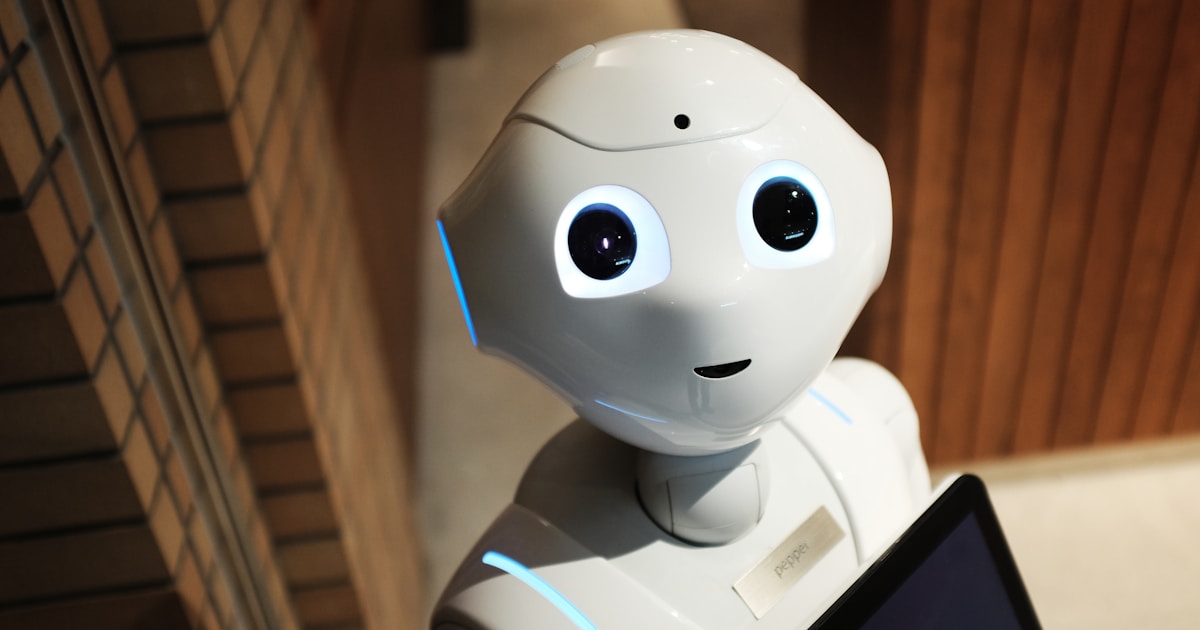
On February 17, 2026, Galgotias University was ordered to vacate its exhibition stall at the India AI Impact Summit — the country’s most significant AI event, attended by over twenty heads of state, Sundar Pichai, Sam Altman, and Dario Amodei.
The reason: they had presented a Chinese-made robot dog as their own invention.
And then it got worse.
This is not just a story about one university doing something embarrassing. This is a story about systemic problems in Indian technical education, the pressure to fake innovation for optics, and what happens when a university’s marketing team runs ahead of its engineering department.
Let me walk through exactly what happened.
The Setup: India AI Impact Summit 2026
The India AI Impact Summit ran from February 16-20, 2026 at Bharat Mandapam in New Delhi. This was not a small conference. This was India’s statement to the world about its AI ambitions.
The guest list included:
- Sundar Pichai (Google CEO)
- Sam Altman (OpenAI CEO)
- Dario Amodei (Anthropic CEO)
- Jensen Huang (NVIDIA CEO)
- 20+ heads of state and global leaders
- Representatives from every major tech company
The Indian government set up exhibition pavilions where universities, startups, and research institutions could showcase their AI and robotics work. The message was clear: India is building real technology, not just outsourcing it.
Galgotias University, a private university based in Greater Noida, Uttar Pradesh, had a large exhibition stall. On that stall, they displayed a quadruped robot dog they called “Orion.”
The Claim
On the first day of the summit, Neha Singh — Galgotias University’s Professor of Communications — gave an interview to DD News, India’s state-run broadcaster. In the interview, she stated that the robot dog “Orion” was developed by the Centre of Excellence at Galgotias University.
The clip went viral. A university in Greater Noida claiming to have built a sophisticated quadruped robot was exciting news. Indian media picked it up. Social media celebrated it.
Then the internet did what the internet does. People looked closer.
The Reality: It Was a Unitree Go2
Within hours, robotics enthusiasts and engineers on social media identified the robot. It was not a Galgotias creation. It was the Unitree Go2, a commercially available quadruped robot manufactured by Unitree Robotics, a Chinese company based in Hangzhou.
The Unitree Go2 is not obscure. It is one of the most popular consumer/educational robot dogs in the world. Key facts:
- Manufacturer: Unitree Robotics (China)
- Price in India: Between INR 2 lakh and INR 3 lakh (roughly $2,400 - $3,600)
- Availability: Sold through online distributors in India and globally
- Use case: Education, research, entertainment
- Release: Available since 2023
This is a product you can buy on the internet. Galgotias University presented it as something their students and faculty had built.
The Government Response
Government officials moved quickly. According to Bloomberg, two government officials confirmed that Galgotias University was ordered to take down its exhibition stall and vacate the summit.
This was not a quiet request. The removal happened mid-summit, while the event was still running. In full view of international media and global tech leaders. For a government event designed to showcase India’s innovation capabilities, having an exhibitor caught faking their work was deeply embarrassing.
It Got Worse: The Drone
If the robot dog was the headline, the drone was the subplot that made the story truly painful.
At the same Galgotias exhibition stall, the university was also displaying a soccer-playing drone. Observers identified it as the Striker V3 ARF, manufactured by Helsel Group, a South Korean robotics company.
The Helsel Striker V3 is commercially available in India for approximately INR 40,000 (roughly $480). It is a product designed for drone soccer competitions.
So the university was not just caught presenting one commercial product as their own creation. They were caught doing it twice, with products from two different countries, at the same stall, at the same event.
Galgotias University’s Response
The university’s public response went through several phases:
Phase 1: Silence. For the first few hours after being identified, the university said nothing.
Phase 2: Denial. The university issued a statement claiming they had not built the robot. They said the Unitree Go2 had been “purchased from Unitree and was being used solely as an educational tool for students.” They claimed it was not presented as an original product developed on campus.
This contradicts the video of their own professor saying on national television that it was developed at the university.
Phase 3: Blame the representative. In a subsequent statement, Galgotias University apologized for “the confusion” and said that Neha Singh, their representative at the summit, was “not authorized to talk to the media” and was “ill-informed.”
Let me unpack that. The university sent a Professor of Communications to a major government summit, positioned her at their exhibition stall, and then claimed she was not authorized to speak to media and did not know what she was talking about. That explanation raises more questions than it answers.
The Political Fallout
The controversy reached the Uttar Pradesh state assembly. Samajwadi Party, the main opposition party, demanded an investigation into the incident. Their MLA raised questions about:
- How did Galgotias University secure a prominent exhibition space at a government summit?
- Who approved the university’s exhibition content?
- What oversight mechanisms exist for government-sponsored technology showcases?
- What action will be taken against the university?
These are legitimate questions. A university that presents commercially available products as its own innovations at a government event raises serious concerns about verification processes.
International Media Coverage
The story was picked up by Bloomberg, NBC News, Al Jazeera, Gulf News, and Global Times, among others. The headlines were uniformly negative:
- Bloomberg: “Indian University Told to Exit AI Summit Over Robot Claim”
- NBC News: “A robotic dog made in China gets an Indian university kicked out of an AI summit”
- Al Jazeera: “Indian university faces backlash for presenting Chinese robot as its own”
For an event designed to position India as a serious AI power, this coverage was exactly the opposite of what the government wanted.
What This Actually Says About Indian Tech Education
Here is where I stop reporting and start giving my perspective.
The Galgotias incident is embarrassing, but it is not surprising. It is the logical outcome of several systemic problems in Indian technical education:
The Innovation Theater Problem
Indian universities are under enormous pressure to demonstrate “innovation” and “research output.” Rankings, accreditation, and government funding increasingly depend on visible markers of technological achievement. This creates incentives to perform innovation rather than actually do it.
Buying a commercial robot and putting your university’s name on it is cheaper and faster than spending years developing robotics capabilities. The calculation is cynical but rational: most people cannot tell the difference, and the PR value is immediate.
The Marketing-First Approach
Many Indian private universities operate primarily as businesses. Their revenue depends on attracting students, and attracting students depends on brand perception. A viral video of “our students built a robot dog” is worth more to the admissions office than a peer-reviewed paper that nobody reads.
Galgotias University has a significant marketing operation. Their presence at the AI Summit was, at its core, a marketing exercise. The problem is that they marketed something that was not true.
The Verification Gap
Nobody checked. The summit organizers did not verify the claims of their exhibitors before the event. The university’s own administration either did not know what their stall was displaying or did not care. The state broadcaster aired the claim without fact-checking.
This verification gap exists across Indian institutions. Research papers are published without proper review. Student projects are presented without verification of originality. University claims about placements, research output, and innovation go unchecked by any independent authority.
The Students Are the Victims
I want to be clear about something: the students at Galgotias University did not do this. The university’s administration and marketing team made the decisions that led to this embarrassment. But it is the students — current and past — who now carry a university name associated with fraud on their resumes.
That is the real damage. Not the political fallout. Not the international embarrassment. The damage to thousands of students who had nothing to do with this decision but whose degree just lost credibility.
What Should Have Happened
The right version of this story would have been simple:
“Galgotias University demonstrates how they use Unitree Go2 robots and Helsel drones as educational tools to teach robotics and computer vision to engineering students.”
That is a legitimate story. Using commercial robots as teaching tools is exactly what universities should be doing. Students programming a Unitree Go2 to navigate obstacles, respond to voice commands, or work collaboratively with drones — that is real education.
Nobody would have criticized Galgotias for saying “we bought these robots and our students are learning from them.” That is what every university does with lab equipment. You do not build your own oscilloscopes.
The lie was unnecessary. The truth was good enough.
What Needs to Change
Government event organizers need verification processes. If a university claims they built something, verify it before giving them a stage at a national summit attended by global leaders.
Universities need to separate marketing from academics. When the marketing department controls what gets displayed at a technology conference, you get exactly this kind of incident.
Media needs basic fact-checking. DD News aired a claim that a commercially available Chinese robot was an Indian university innovation. A five-minute Google search would have caught it.
Accreditation bodies need teeth. If a university is caught misrepresenting its capabilities at a government event, there should be consequences beyond a slap on the wrist and a forced apology.
The Broader Context
India has genuine AI talent. The country produces some of the world’s best engineers and researchers. Indian-origin leaders run Google, Microsoft, and Adobe. Indian AI startups are doing real, innovative work.
But incidents like this undermine the narrative. When a university gets caught faking innovation at the country’s premier AI showcase, it gives ammunition to everyone who says India’s tech industry is built on appearances rather than substance.
That narrative is wrong. But incidents like Galgotias make it harder to fight.
The solution is not more marketing. It is less marketing and more real engineering. Build things. Publish research. Open source your work. Let the code speak for itself. That is how you build credibility that cannot be debunked by a viral tweet.
At CODERCOPS, we believe in building real technology and showing real work. Every project we ship is backed by actual engineering, not presentations. If you want to build something real — whether it is an AI product, a web application, or an automation system — let us build it together.
More from this category
More from Industry News
 R.01
R.01 Amazon Partners with Cerebras to Revolutionize AI Inference with Wafer-Scale Chips
 R.02
R.02 The 2026 Global RAM Shortage: What Every Developer Needs to Know
 R.03
R.03 The Low-Code/No-Code Explosion: A $44.5B Market Developers Can't Ignore
The dispatch
Working notes from
the studio.
A short letter twice a month — what we shipped, what broke, and the AI tools earning their keep.
Discussion
Join the conversation.
Comments are powered by GitHub Discussions. Sign in with your GitHub account to leave a comment.