Web Development · Infrastructure
Edge Functions vs Traditional Serverless — When to Use Which in 2026
Cloudflare Workers, Vercel Edge Functions, and Deno Deploy compete with AWS Lambda and traditional serverless. Here's how to choose the right compute model for your workload.

Anurag Verma
6 min read
Sponsored
The serverless landscape has split into two distinct camps: traditional serverless (AWS Lambda, Google Cloud Functions) and edge functions (Cloudflare Workers, Vercel Edge, Deno Deploy). Both promise “just deploy code, we handle infrastructure” — but they make very different tradeoffs.
Choosing wrong means either overpaying for capabilities you do not need or hitting limitations that require rewriting your application.
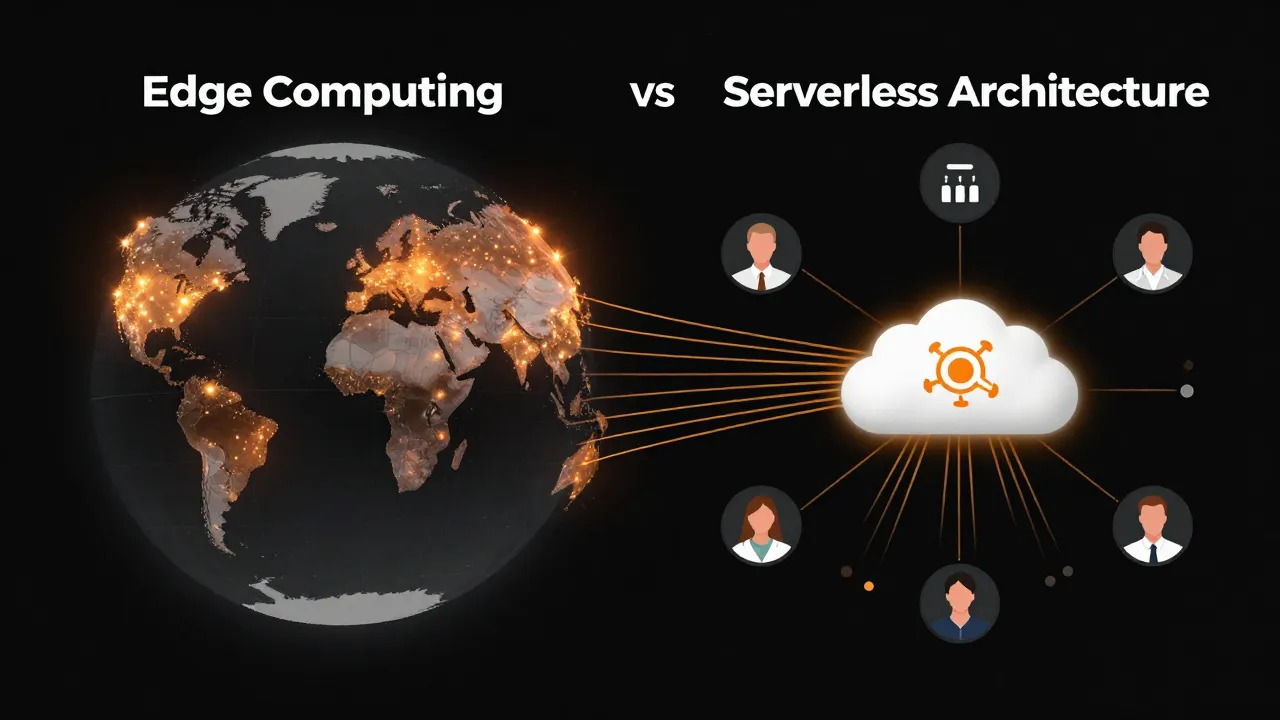
Edge functions and traditional serverless serve different use cases
The Core Difference
Traditional Serverless runs in centralized cloud regions. Your function executes in us-east-1 or eu-west-1, and users worldwide connect to that region.
Edge Functions run at the network edge, in 200+ locations worldwide. Your function executes in the datacenter closest to each user.
Request Flow: Traditional Serverless
User (Tokyo) → CDN → us-east-1 Lambda → Database (us-east-1)
Latency: 150-300ms round trip

Request Flow: Edge Function
User (Tokyo) → Tokyo Edge → (optional) Origin
Latency: 10-50ms for edge-only, 150-300ms if origin needed
Platform Comparison
| Feature | AWS Lambda | Cloudflare Workers | Vercel Edge | Deno Deploy |
|---|---|---|---|---|
| Cold start | 100-3000ms | 0-5ms | 0-10ms | 0-10ms |
| Execution limit | 15 min | 30s (paid: unlimited) | 30s | 50ms (free), higher paid |
| Memory | Up to 10GB | 128MB | 128MB | 512MB |
| Languages | Many | JS/TS/WASM | JS/TS | JS/TS |
| Database access | Any (VPC) | Limited (D1, KV, external) | Limited | Limited |
| Regions | 20+ | 300+ | 100+ | 35+ |
| Pricing model | Per-request + duration | Per-request | Per-request | Per-request |
When to Use Edge Functions
Edge functions excel when:
1. Latency Is Critical
For user-facing requests where every millisecond matters:
// Vercel Edge Function - personalized content
export const config = { runtime: 'edge' }

export default function handler(request: Request) {
  const country = request.headers.get('x-vercel-ip-country')
  const content = getLocalizedContent(country)
  return new Response(content)
}
Use cases:
- A/B testing and feature flags
- Personalization based on location
- Authentication checks
- Request routing
2. You Need Global Distribution
If your users are worldwide and latency consistency matters:
| Region | Lambda (us-east-1) | Edge Function |
|---|---|---|
| New York | 20ms | 15ms |
| London | 100ms | 15ms |
| Tokyo | 200ms | 15ms |
| Sydney | 250ms | 20ms |
3. Simple Compute, No Database
Edge functions work best for stateless operations:
- URL rewriting and redirects
- Header manipulation
- Request/response transformation
- Rate limiting
- Bot detection
4. Cost Optimization at Scale
Edge functions are often cheaper for high-volume, low-compute workloads:
Cost Comparison: 100M requests/month, 50ms average
├── AWS Lambda: ~$200 + data transfer
├── Cloudflare Workers: ~$50 (Paid plan)
└── Vercel Edge: ~$100 (Pro plan)
When to Use Traditional Serverless
Traditional serverless wins when:
1. You Need Significant Compute
Memory-intensive or CPU-intensive workloads:
# AWS Lambda - image processing
import boto3
from PIL import Image

def handler(event, context):
    # Process 50MB image - needs memory
    image = Image.open(download_from_s3(event['key']))
    processed = heavy_processing(image)
    upload_to_s3(processed)
    return {'status': 'complete'}
Lambda offers up to 10GB RAM and 6 vCPUs. Edge functions cap at 128MB.
2. Long-Running Operations
Operations that take more than 30 seconds:
- Video transcoding
- Large file processing
- Batch operations
- ML inference
Lambda supports up to 15 minutes. Edge functions timeout at 30 seconds (or less).
3. Database Connections
Traditional serverless integrates better with databases:
// Lambda with RDS connection
const { Pool } = require('pg')
const pool = new Pool({ connectionString: process.env.DATABASE_URL })

exports.handler = async (event) => {
  const result = await pool.query('SELECT * FROM users WHERE id = $1', [event.id])
  return result.rows[0]
}
Edge functions have limited database options — mainly HTTP-based databases or edge-specific solutions like Cloudflare D1.
4. Complex Dependencies
If you need native modules, large libraries, or custom runtimes:
- Scientific computing (NumPy, SciPy)
- Machine learning (TensorFlow, PyTorch)
- Image/video processing (FFmpeg, ImageMagick)
Edge functions have strict bundle size limits (1-5MB typically).
The Hybrid Pattern
Most production applications use both:
Hybrid Architecture
├── Edge Layer (Cloudflare Workers / Vercel Edge)
│   ├── Authentication verification
│   ├── Rate limiting
│   ├── Request routing
│   ├── Static content personalization
│   └── Cache management
│
├── API Layer (Lambda / Cloud Functions)
│   ├── Business logic
│   ├── Database operations
│   ├── Third-party integrations
│   └── Heavy computation
│
└── Database Layer
    ├── Primary database (RDS, Cloud SQL)
    ├── Cache (Redis, Memcached)
    └── Edge cache (KV, D1)
The edge handles initial request processing. Traditional serverless handles complex operations.
Platform Deep Dives
Cloudflare Workers
Strengths:
- Largest edge network (300+ locations)
- Zero cold starts (V8 isolates)
- Integrated ecosystem (KV, D1, R2, Queues)
- Best pricing at scale
Limitations:
- 128MB memory limit
- JavaScript/TypeScript/WASM only
- Limited Node.js API compatibility
Best for: High-traffic sites, global APIs, real-time applications
Vercel Edge Functions
Strengths:
- Seamless Next.js integration
- Good developer experience
- Automatic edge/serverless routing
Limitations:
- Tied to Vercel platform
- Smaller edge network than Cloudflare
- Higher pricing than Cloudflare
Best for: Next.js applications, frontend-focused teams
Deno Deploy
Strengths:
- Native TypeScript support
- Modern runtime (Deno)
- Good Node.js compatibility
Limitations:
- Smaller network (35 regions)
- Less mature ecosystem
- Free tier limitations
Best for: Deno projects, TypeScript-first teams
AWS Lambda
Strengths:
- Most mature platform
- Broadest language support
- Deep AWS integration
- Highest resource limits
Limitations:
- Cold starts (mitigated with provisioned concurrency)
- Regional deployment requires more work
- Complex pricing
Best for: Complex backends, AWS-centric architectures, heavy compute
Decision Framework
Ask these questions:
1. What is your latency requirement?
- Under 50ms globally → Edge functions
- Under 100ms regionally → Either
- Latency tolerant → Traditional serverless
2. How much compute do you need?
- Under 128MB RAM, under 30s → Edge functions
- More → Traditional serverless
3. Do you need database access?
- Simple KV or document store → Edge (with caveats)
- Relational or complex queries → Traditional serverless
4. What is your traffic pattern?
- High volume, simple operations → Edge functions
- Variable volume, complex operations → Traditional serverless
5. What is your team’s expertise?
- Frontend/JavaScript → Edge functions
- Backend/Multiple languages → Traditional serverless
The Future
The line between edge and traditional serverless is blurring:
- Edge databases (D1, Turso, Neon Edge) are improving
- Edge functions are getting more resources
- Traditional serverless is getting faster cold starts
- Hybrid routing is becoming automatic
By 2027, the distinction may matter less as platforms converge. For now, understanding the tradeoffs helps you choose the right tool for each part of your application.
Sponsored
More from this category
More from Web Development



Sponsored
The dispatch
Working notes from
the studio.
A short letter twice a month — what we shipped, what broke, and the AI tools earning their keep.
Discussion
Join the conversation.
Comments are powered by GitHub Discussions. Sign in with your GitHub account to leave a comment.
Sponsored