Web Development · Backend
API Design in 2026 — GraphQL vs REST vs tRPC, and When to Use Each
The API landscape has matured beyond the GraphQL vs REST debate. Here's how to choose between REST, GraphQL, tRPC, and gRPC based on your actual requirements.

Anurag Verma
7 min read
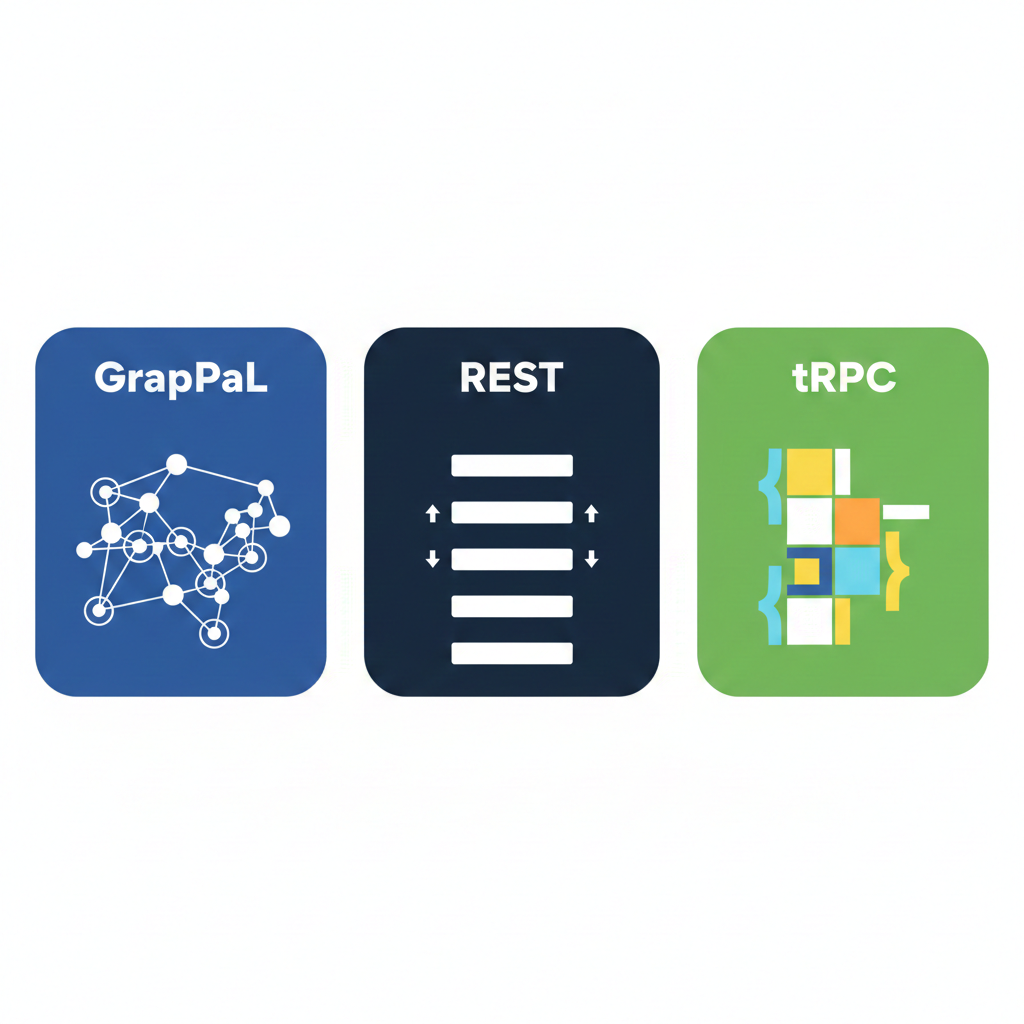
The “GraphQL vs REST” debate is over — not because one won, but because developers realized they solve different problems. In 2026, the question is not which is better, but which is right for your specific situation.
Understanding when to use REST, GraphQL, tRPC, or gRPC can save months of refactoring.
Modern API design is about choosing the right tool for the job
The Modern API Landscape
| Protocol | Best For | Type Safety | Learning Curve |
|---|---|---|---|
| REST | Public APIs, simple CRUD | Manual (OpenAPI) | Low |
| GraphQL | Complex frontends, multiple clients | Schema-based | Medium |
| tRPC | Full-stack TypeScript apps | End-to-end | Low |
| gRPC | Microservices, high performance | Protobuf | High |
Each has found its niche. Let’s understand why.
REST: The Proven Standard
REST remains the default for public APIs and simple applications.
When REST Wins
1. Public APIs
REST is universally understood. Any developer can call your API without learning new tools:
curl https://api.example.com/users/123No GraphQL clients, no code generation, no special tooling required.
2. Simple CRUD Operations
For straightforward create-read-update-delete operations, REST’s simplicity is a feature:
GET    /users          # List users
POST   /users          # Create user
GET    /users/:id      # Get user
PUT    /users/:id      # Update user
DELETE /users/:id      # Delete user
No query language needed. HTTP verbs express intent clearly.
3. Caching
REST works naturally with HTTP caching:
GET /users/123
Cache-Control: max-age=3600

# CDNs, browsers, and proxies understand this
GraphQL POST requests are harder to cache at the HTTP layer.
Modern REST Best Practices
REST in 2026 often includes:
# OpenAPI specification for type generation
openapi: 3.1.0
paths:
  /users/{id}:
    get:
      responses:
        200:
          content:
            application/json:
              schema:
                $ref: '#/components/schemas/User'
Tools like openapi-typescript generate types from OpenAPI specs, bringing type safety to REST.
GraphQL: Complex Frontend Needs
GraphQL excels when frontends have complex, varying data requirements.
When GraphQL Wins
1. Multiple Clients with Different Needs
Mobile app needs minimal data. Web app needs everything. Admin panel needs even more:
# Mobile: minimal data
query {
  user(id: 123) {
    name
    avatarUrl
  }
}

# Web: more data
query {
  user(id: 123) {
    name
    email
    avatarUrl
    posts(limit: 10) {
      title
      excerpt
    }
  }
}

# Admin: everything
query {
  user(id: 123) {
    name
    email
    avatarUrl
    createdAt
    lastLogin
    posts { ... }
    comments { ... }
    activityLog { ... }
  }
}
One endpoint serves all clients. No backend changes needed for new frontend requirements.
2. Complex, Nested Data
When you need to fetch related data in one request:
query OrderDetails {
  order(id: "abc") {
    status
    customer {
      name
      email
    }
    items {
      product {
        name
        price
        inventory {
          available
        }
      }
      quantity
    }
    shipping {
      carrier
      trackingNumber
      estimatedDelivery
    }
  }
}
REST would require multiple requests or custom endpoints.
3. Rapid Frontend Iteration
Frontend teams can iterate without waiting for backend changes. If the schema supports it, frontends can request it.
GraphQL Challenges
GraphQL has real costs:
- Complexity: Requires more tooling, client libraries, and server setup
- N+1 queries: Without DataLoader, nested queries can be inefficient
- Caching: Harder to cache at HTTP layer
- Security: Query complexity attacks, depth limiting required
- Versioning: Schema evolution requires careful planning
tRPC: Full-Stack TypeScript
tRPC has emerged as the preferred choice for full-stack TypeScript applications.
When tRPC Wins
1. Same Team, Same Language
When frontend and backend are TypeScript:
// Server: define router
const appRouter = router({
  user: router({
    get: procedure
      .input(z.object({ id: z.string() }))
      .query(async ({ input }) => {
        return await db.user.findUnique({ where: { id: input.id } })
      }),

    create: procedure
      .input(z.object({
        name: z.string(),
        email: z.string().email()
      }))
      .mutation(async ({ input }) => {
        return await db.user.create({ data: input })
      })
  })
})

// Client: fully typed, no code generation
const user = await trpc.user.get.query({ id: '123' })
// user is fully typed based on server return type
No OpenAPI specs. No GraphQL schemas. No code generation. Types flow automatically from server to client.
2. Rapid Development
Change the server, and TypeScript immediately shows what breaks on the client:
// Server change: add required field
.input(z.object({
  name: z.string(),
  email: z.string().email(),
  role: z.enum(['admin', 'user'])  // New required field
}))

// Client: TypeScript error immediately
trpc.user.create.mutate({ name: 'John', email: 'john@example.com' })
// Error: Property 'role' is missing
3. Monorepo Applications
tRPC shines in monorepos where server and client share a codebase:
apps/
├── web/          # Next.js frontend
├── api/          # tRPC server
└── mobile/       # React Native (also uses tRPC)
packages/
└── trpc/         # Shared router types
tRPC Limitations
tRPC is not suitable for:
- Public APIs (requires TypeScript client)
- Multi-language backends
- Teams that prefer REST conventions
- APIs consumed by external parties
gRPC: High-Performance Microservices
gRPC dominates internal microservice communication.
When gRPC Wins
1. Service-to-Service Communication
When services communicate at high volume:
// user.proto
service UserService {
  rpc GetUser(GetUserRequest) returns (User);
  rpc ListUsers(ListUsersRequest) returns (stream User);
  rpc CreateUser(CreateUserRequest) returns (User);
}

message User {
  string id = 1;
  string name = 2;
  string email = 3;
}
Binary protocol, HTTP/2 streaming, automatic code generation for any language.
2. Performance-Critical Paths
gRPC’s binary serialization is faster than JSON:
Serialization Benchmark (10K messages)
├── gRPC (Protobuf): 12ms
├── JSON: 45ms
└── GraphQL: 52ms
For high-throughput services, this adds up.
3. Polyglot Microservices
gRPC generates clients for Go, Java, Python, Rust, and more from the same .proto definition.
gRPC Challenges
- Browser support: Requires gRPC-Web proxy
- Debugging: Binary protocol is harder to inspect than JSON
- Tooling: Requires protobuf compiler and plugins
- Learning curve: Protocol buffers are another thing to learn
Decision Framework
For Public APIs
Use REST.
Public APIs prioritize accessibility. Any developer with curl should be able to call your API.
For Internal Web Applications
Consider your team:
| Situation | Recommendation |
|---|---|
| Full-stack TypeScript team | tRPC |
| Separate frontend/backend teams | GraphQL or REST |
| Complex, varying data needs | GraphQL |
| Simple CRUD operations | REST |
For Microservices
Use gRPC for service-to-service. REST or GraphQL for edge services that face clients.
For Mobile Applications
GraphQL often wins. Mobile apps benefit from:
- Fetching exactly what they need (battery/bandwidth)
- Single requests for complex screens
- Offline support with Apollo/Relay caching
Hybrid Architectures
Most production systems use multiple protocols:
Modern API Architecture
├── Public API: REST (OpenAPI)
│   └── External developers, partners
│
├── Web/Mobile BFF: GraphQL or tRPC
│   └── Internal frontends
│
├── Internal Services: gRPC
│   └── Service-to-service communication
│
└── Real-time: WebSockets or SSE
    └── Live updates, notifications
The key insight: different parts of your system have different needs. Match the protocol to the requirement.
The Pragmatic Choice
Stop asking “which is best?” Start asking:
- Who consumes this API?
- What are their data requirements?
- What is our team’s expertise?
- How will requirements evolve?
The answer often becomes obvious. And remember: a working API with the “wrong” choice beats a perfect API that never ships.
More from this category
More from Web Development
 R.01
R.01 Node.js vs Deno vs Bun in 2026: The JavaScript Runtime Wars
 R.02
R.02 WASI 0.3 Arrives: Native Async Makes WebAssembly a Real Server-Side Contender
 R.03
R.03 Astro 6 Beta — CSP Nonces, Declarative Web Components, and Architecture Tradeoffs
The dispatch
Working notes from
the studio.
A short letter twice a month — what we shipped, what broke, and the AI tools earning their keep.
Discussion
Join the conversation.
Comments are powered by GitHub Discussions. Sign in with your GitHub account to leave a comment.