AI Integration · Development
Vibe Coding Changed How We Build Software. Here's What Nobody Tells You.
41% of global code is now AI-generated. Senior devs report 81% productivity gains. But 63% have spent more time debugging AI code than writing it themselves. The vibe coding revolution has a fine print.

Anurag Verma
7 min read
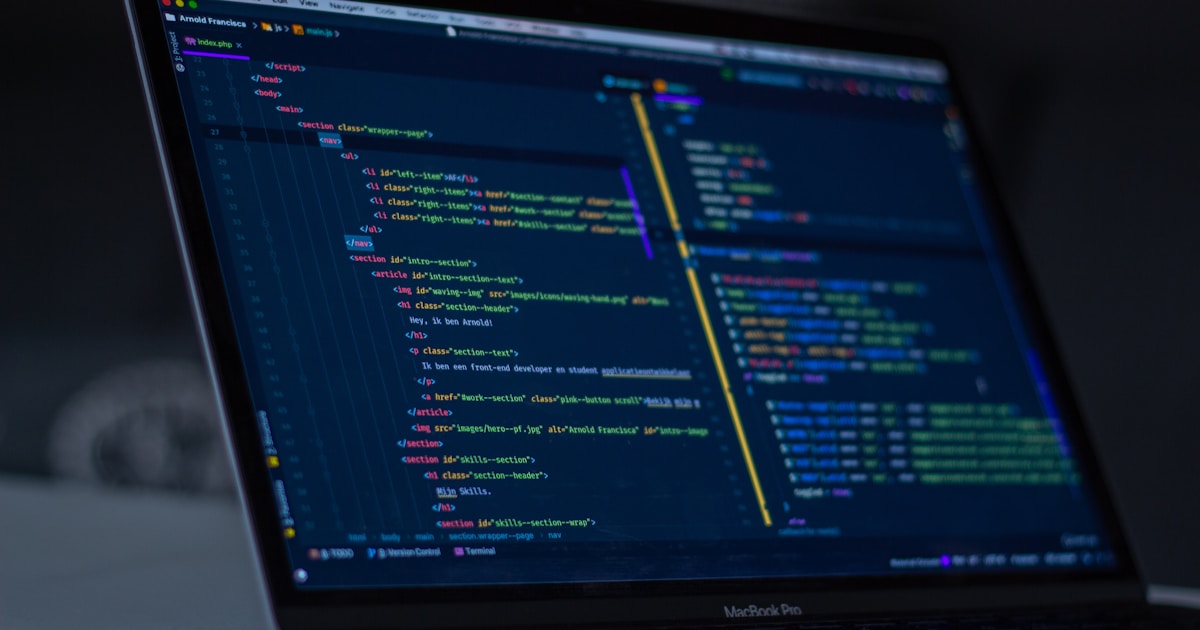
Andrej Karpathy coined the term in early 2025. By 2026, vibe coding is not a meme anymore — it is how a significant portion of software gets built. The numbers are hard to argue with: 41% of all global code is now AI-generated, representing 256 billion lines written in 2024 alone. 92% of US developers use AI coding tools daily. 87% of Fortune 500 companies have adopted at least one vibe coding platform.
But here is what the hype cycle leaves out: 63% of developers have spent more time debugging AI-generated code than they would have spent writing it themselves. At least once. That statistic does not invalidate vibe coding — it defines its actual shape. The revolution is real, but it is more nuanced than “AI writes your code now.”
At CODERCOPS, we have been shipping production code with AI tools for over a year. Here is what we have actually learned.

What Vibe Coding Actually Is
The original idea was simple: instead of writing code character by character, you describe what you want in natural language and the AI generates it. “I just vibe with the AI and code appears,” as developers started saying. What began as a joke became a methodology.
In practice, vibe coding in 2026 looks like this:
Traditional Development Workflow
├── Read requirements
├── Think about architecture
├── Write code line by line
├── Run it, see errors
├── Debug manually
├── Write tests
└── Iterate

Vibe Coding Workflow (2026)
├── Describe intent in natural language
├── AI generates initial implementation
├── Review and refine with follow-up prompts
├── AI writes tests based on your acceptance criteria
├── You verify behavior matches intent
├── AI handles boilerplate, you handle judgment calls
└── Iterate with the AI as a pair programmer
The key shift is from imperative programming (telling the machine exactly what to do) to intent programming (describing what you want and reviewing what the AI produces).
The Productivity Gains Are Real — But Uneven
The data on productivity gains is clear, but it varies dramatically by experience level:
| Experience Level | Productivity Gain | Key Benefit | Key Risk |
|---|---|---|---|
| Senior (10+ years) | 81% | AI handles routine work, they focus on architecture | Over-reliance on AI for unfamiliar domains |
| Mid-level (3-10 years) | 51% faster task completion | Accelerated feature delivery | More time reviewing generated code |
| Junior (0-3 years) | Mixed results | Fast prototyping | 40% deploy code without full understanding |
That last number — 40% of junior developers admitting they deploy code without fully understanding it — is the stat that should concern every engineering leader. Vibe coding lowers the barrier to producing code. It does not lower the barrier to producing good code.
Where Vibe Coding Actually Excels
After a year of daily use, here are the tasks where AI generation genuinely saves time:
- Boilerplate and scaffolding — Setting up project structures, config files, CI/CD pipelines. AI is consistently good at this.
- CRUD operations — Standard database operations, REST endpoints, form handling. This is the AI’s bread and butter.
- Test generation — Given a function and acceptance criteria, AI generates decent test suites. Not perfect, but a useful starting point.
- Documentation — AI-generated docs from code are surprisingly good when you review and edit them.
- Language translation — Converting code between languages (Python to TypeScript, etc.) is where AI genuinely shines.
- Regex and complex queries — AI is better than most humans at writing regex patterns and complex SQL queries on the first attempt.
Where Vibe Coding Falls Apart
And here are the tasks where blindly accepting AI output will hurt you:
- Security-sensitive code — AI routinely generates code with subtle vulnerabilities. SQL injection, improper input validation, insecure defaults. Always review security-critical paths manually.
- Performance-critical paths — AI optimizes for readability and correctness, not performance. It will generate O(n²) solutions when O(n) exists.
- Complex state management — Anything involving distributed state, concurrency, or race conditions. AI generates code that works in the happy path and breaks under load.
- Novel algorithms — If the problem does not closely resemble something in the training data, AI output quality drops significantly.
- Architecture decisions — AI can implement any architecture you describe. It cannot tell you which architecture is right for your specific constraints.
The Rise of the AI Architect
The most significant cultural shift in 2026 is the emergence of a new role: the AI Architect (or “Orchestrator”). This person does not write much code directly. Instead, they:
- Define system architecture and constraints
- Break problems into AI-addressable chunks
- Write precise prompts that produce correct implementations
- Review AI output for correctness, security, and performance
- Make judgment calls that AI cannot
This is not a junior role. The developers who thrive as AI architects are the ones with the deepest understanding of fundamentals — because you cannot review code effectively if you do not understand what correct code looks like.
The AI Architect's Day
├── Morning: Review overnight AI-generated PRs
├── 9-10: Architecture session — define system boundaries
├── 10-12: Prompt engineering — describe components to AI
├── 12-1: Review generated code, flag issues
├── 1-3: Handle the hard parts — security, state, concurrency
├── 3-4: Write acceptance criteria for AI-generated tests
└── 4-5: Code review — both human and AI output
The Day 2 Problem
The industry spent 2025 solving the “Day 1 problem” — how fast can you generate an app? In 2026, the focus has shifted to the “Day 2 problem” — how do you maintain, scale, debug, and iterate on AI-generated software?
This is where the cracks show:
- AI-generated code is harder to maintain because it often lacks the structural consistency that comes from a single developer’s style and mental model.
- Debugging AI code requires understanding AI code, which means you need the skills vibe coding was supposed to make unnecessary.
- Technical debt accumulates faster when code is generated quickly without deep understanding of long-term implications.
- Context window limits mean AI cannot reason about your entire codebase at once. The larger your project, the more the AI’s suggestions diverge from your actual architecture.
Our Rules for Vibe Coding at CODERCOPS
After a year of production use, we have settled on a set of internal rules:
-
Never ship code you do not understand. If you cannot explain what the AI generated, you cannot debug it when it breaks at 2 AM.
-
AI writes the first draft. Humans own the final version. Treat AI output like a junior developer’s PR — review everything.
-
Security-critical code gets written by hand. Authentication, authorization, encryption, input validation. These are not tasks for “vibing.”
-
Use AI for breadth, humans for depth. AI is great at generating many things quickly. Humans are better at getting one thing exactly right.
-
Prompt with precision. Vague prompts produce vague code. Specify types, edge cases, error handling, and constraints explicitly.
-
Keep your fundamentals sharp. The developers who get the most from AI tools are the ones who could write the code themselves. AI amplifies skill — it does not replace it.
What Comes Next
The vibe coding revolution is not slowing down. Tools like Cursor, Windsurf, and Replit Agent are evolving from code generators into autonomous engineering agents that can manage entire repositories. Google’s Antigravity is pushing multi-agent orchestration where different AI agents work on different parts of your codebase simultaneously.
The developers who will thrive in this environment are not the ones who can prompt the fastest. They are the ones who understand systems deeply enough to direct AI effectively and catch its mistakes before they reach production. The barrier to creating software has never been lower. The barrier to creating good software has not changed.
Vibe coding is not the end of programming. It is the end of programming as typing. The thinking part — the part that actually matters — is more important than ever.
More from this category
More from AI Integration
 R.01
R.01 Google Workspace Gets a Major AI Boost: Gemini Now Powers Docs, Sheets, Slides & Drive
 R.02
R.02 Agentic AI in 2026: Inside Google's Agent Leap Report and the Rise of Autonomous AI
 R.03
R.03 Best AI Coding Models Compared: The Definitive February 2026 Guide
The dispatch
Working notes from
the studio.
A short letter twice a month — what we shipped, what broke, and the AI tools earning their keep.
Discussion
Join the conversation.
Comments are powered by GitHub Discussions. Sign in with your GitHub account to leave a comment.