AI Integration · Agriculture
Bharat-VISTAAR — India's AI Platform for Farmers & the Agritech Opportunity
Budget 2026 launches Bharat-VISTAAR, a multilingual AI platform for Indian farmers. Here's how it works and why agritech startups should pay attention.

Anurag Verma
8 min read
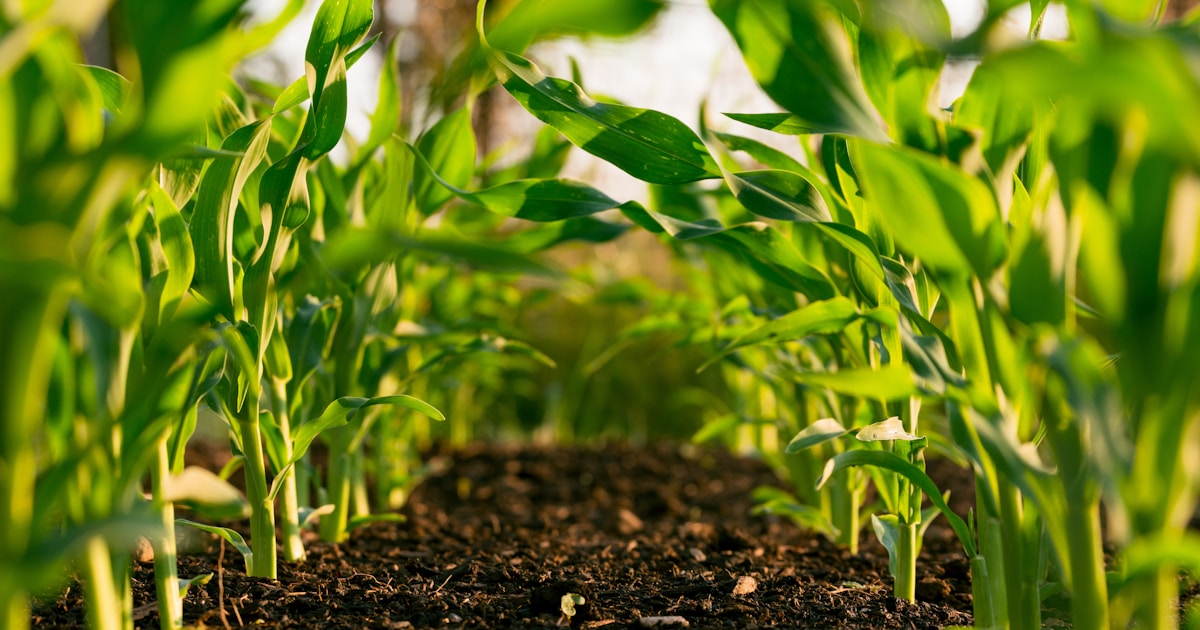
India’s agriculture sector is at a crossroads. It employs roughly 42% of the national workforce, yet productivity per hectare continues to lag behind global benchmarks. Information asymmetry, fragmented supply chains, and limited access to modern farming techniques keep millions of smallholder farmers locked in cycles of low yield and uncertain income. Union Budget 2026-27 took a decisive step to address this gap with the announcement of Bharat-VISTAAR — a multilingual, AI-powered platform designed to put advanced agricultural intelligence directly into the hands of Indian farmers.
If you are building in agritech, investing in rural technology, or simply tracking India’s digital transformation, Bharat-VISTAAR is the most significant policy development of the year. Here is everything you need to know.
What Is Bharat-VISTAAR?
Bharat-VISTAAR is a centralized AI platform developed in collaboration with the Indian Council of Agricultural Research (ICAR). The platform leverages artificial intelligence and machine learning to deliver actionable, localized farming advice to farmers across India. Unlike previous government portals that offered static information in a one-size-fits-all format, Bharat-VISTAAR is built to be dynamic, context-aware, and — critically — multilingual.
The platform is designed to serve farmers in their native languages, addressing one of the most persistent barriers to technology adoption in rural India. With 22 officially recognized languages and hundreds of dialects, any digital tool that operates only in English or Hindi effectively excludes hundreds of millions of potential users. Bharat-VISTAAR’s multilingual architecture ensures that a rice farmer in Tamil Nadu receives the same quality of AI-driven guidance as a wheat grower in Punjab, and in a language they actually understand.
Core Capabilities of the Platform
At its foundation, Bharat-VISTAAR is built around three pillars:
-
AI-Driven Agricultural Advisory: The platform uses machine learning models trained on ICAR’s decades of agronomic research data to provide crop-specific recommendations. These include optimal sowing times, irrigation schedules, fertilizer dosages, and pest management strategies tailored to local soil and weather conditions.
-
Market Linkage and Price Intelligence: One of the biggest pain points for Indian farmers is the disconnect between farm-gate prices and market rates. Bharat-VISTAAR integrates real-time mandi (market) data to help farmers decide when and where to sell their produce for the best returns. This feature alone could meaningfully improve farmer incomes by reducing dependence on middlemen.
-
Productivity Enhancement Tools: The platform includes crop monitoring dashboards, soil health analysis based on satellite and sensor data, and weather forecasting modules. Farmers can access predictive analytics that help them anticipate risks and adjust their practices proactively rather than reactively.
Why Bharat-VISTAAR Matters for Indian Agriculture
The timing of this initiative is not accidental. India’s agricultural sector faces compounding pressures — climate variability, water scarcity, shrinking landholdings, and a young population that is increasingly moving away from farming. At the same time, the opportunity is enormous. India’s plant-based food market is projected to grow at 18% annually through 2030, driven by shifting consumer preferences and rising health consciousness. Smart farming technologies such as precision agriculture, crop monitoring via drones, and IoT-enabled soil analysis are no longer experimental — they are becoming essential.
Bharat-VISTAAR positions the government as an enabler of this transition. By creating a unified, open platform backed by ICAR’s research infrastructure, the government is essentially building the digital rails on which private innovation can run. This is a pattern we have seen work before — UPI created the rails for fintech, and India Stack created the rails for digital identity. Bharat-VISTAAR could do the same for agritech.
The Broader Budget 2026 Agricultural Context
Bharat-VISTAAR does not exist in isolation. Union Budget 2026-27 included several complementary measures aimed at strengthening the agricultural ecosystem:
- Enhanced credit access for farmers through expanded Kisan Credit Card coverage
- Cold chain infrastructure investments to reduce post-harvest losses, which currently account for an estimated 15-20% of total produce
- Support for Farmer Producer Organizations (FPOs) to improve collective bargaining power
- Digital agriculture missions at the state level, creating a federated approach to farm-level data collection
Together, these measures signal a comprehensive strategy: digitize the information layer (Bharat-VISTAAR), strengthen the financial layer (credit and insurance), and build the physical layer (cold chains and logistics). Agritech startups that align their offerings with this three-layer framework will find the most traction.
The Agritech Startup Opportunity
For agritech entrepreneurs, Bharat-VISTAAR opens up several concrete pathways:
1. Building on Top of the Platform
If Bharat-VISTAAR follows an open API model — which early indications suggest it will — startups can build specialized applications that plug into the platform’s data backbone. Think of it as building apps on top of an operating system. A startup focused on organic certification, for instance, could use Bharat-VISTAAR’s soil health data to automate compliance checks. A drone-based crop monitoring company could feed its imagery data into the platform’s advisory engine to improve recommendation accuracy.
2. Partnering with ICAR
The collaboration between the government and ICAR creates a direct channel for startups to engage with one of Asia’s largest agricultural research networks. ICAR operates over 100 research institutes and 700+ Krishi Vigyan Kendras (farm science centers) across the country. Startups that can demonstrate how their technology complements ICAR’s research objectives — whether in seed technology, bio-inputs, or precision agriculture — have a realistic path to pilot programs and scaled deployment.
3. AI and IoT for Food Safety
Beyond the farm, there is a growing opportunity in AI and IoT applications for food safety and traceability. As India’s food processing sector expands, regulators and consumers alike are demanding greater transparency in the supply chain. Startups working on blockchain-based traceability, sensor-driven quality monitoring, or AI-powered contamination detection can leverage the data ecosystem that Bharat-VISTAAR is creating to build end-to-end solutions from farm to fork.
4. Alternative Proteins and Cultured Meat
While not directly connected to Bharat-VISTAAR, the broader agricultural policy environment in Budget 2026 is increasingly accommodating of alternative food technologies. Consumer acceptance of cultured meat products is growing globally, and India’s large vegetarian population represents a unique market for plant-based and cell-cultivated proteins. Startups working at the intersection of agricultural data (from platforms like Bharat-VISTAAR) and food technology innovation are well-positioned to capture this emerging market segment.
Challenges and Considerations
No platform of this ambition launches without challenges. There are several factors that will determine whether Bharat-VISTAAR achieves its potential or becomes another underutilized government portal:
Digital Literacy and Access: While smartphone penetration in rural India has improved dramatically, true digital literacy remains uneven. The platform’s multilingual design addresses the language barrier, but usability, interface simplicity, and offline functionality will be equally critical. If a farmer needs a training session to use the app, adoption will stall.
Data Quality and Localization: AI is only as good as its training data. ICAR’s research data is extensive but not uniformly digitized or standardized across regions. The accuracy of Bharat-VISTAAR’s recommendations will depend on continuous data collection, validation, and localization at the district and even block level.
Last-Mile Connectivity: In many farming regions, internet connectivity remains patchy. The platform will need to support low-bandwidth modes, SMS-based interactions, and possibly voice-based AI assistants to reach farmers in connectivity-challenged areas.
Trust and Adoption: Indian farmers have been exposed to numerous digital initiatives over the years, with mixed results. Building trust will require demonstrable value — farmers need to see tangible improvements in yield, income, or risk mitigation before they integrate a new platform into their daily routines.
What This Means for Investors and Builders
The signal from Budget 2026 is unambiguous: the Indian government views AI-powered agriculture as a national priority, and it is committing institutional resources — ICAR, budget allocations, and policy frameworks — to make it happen. For venture investors, this reduces the policy risk that has historically made agritech a cautious bet in India. For builders, it creates a platform-level opportunity that did not exist a year ago.
The agritech startups that will win in this environment are the ones that think of Bharat-VISTAAR not as competition but as infrastructure. Build on it, integrate with it, and extend its capabilities into specialized verticals. The farmers are waiting — 42% of India’s workforce is a market that cannot be ignored.
Final Thoughts
Bharat-VISTAAR represents a paradigm shift in how India approaches agricultural technology. By combining ICAR’s deep research expertise with modern AI capabilities and a multilingual-first design philosophy, the platform has the potential to reach farmers that previous digital initiatives could not. The agritech opportunity in India is not a future projection — it is here, backed by government policy, market demand, and a massive underserved user base.
If you are building for India’s agricultural future, the time to pay attention is now.
Suggested Internal Links:
- India’s AI Market to Hit $17 Billion by 2027 — Where the Growth Is Coming From
- India Semiconductor Mission 2.0 — Rs 40,000 Cr Push for Electronics Manufacturing
Call to Action: Are you building agritech solutions that could integrate with Bharat-VISTAAR? CoderCops works with startups navigating India’s agricultural technology landscape. Get in touch with our team to discuss how we can help you build, scale, and connect with the right partners.
More from this category
More from AI Integration
 R.01
R.01 Google Workspace Gets a Major AI Boost: Gemini Now Powers Docs, Sheets, Slides & Drive
 R.02
R.02 Agentic AI in 2026: Inside Google's Agent Leap Report and the Rise of Autonomous AI
 R.03
R.03 Best AI Coding Models Compared: The Definitive February 2026 Guide
The dispatch
Working notes from
the studio.
A short letter twice a month — what we shipped, what broke, and the AI tools earning their keep.
Discussion
Join the conversation.
Comments are powered by GitHub Discussions. Sign in with your GitHub account to leave a comment.