Technology · Manufacturing
India Semiconductor Mission 2.0 — Rs 40,000 Cr Push for Electronics Manufacturing
India Semiconductor Mission 2.0 increases ECMS outlay to Rs 40,000 Cr. Here's what changed from 1.0 to 2.0 and the investment opportunities it creates.

Anurag Verma
11 min read
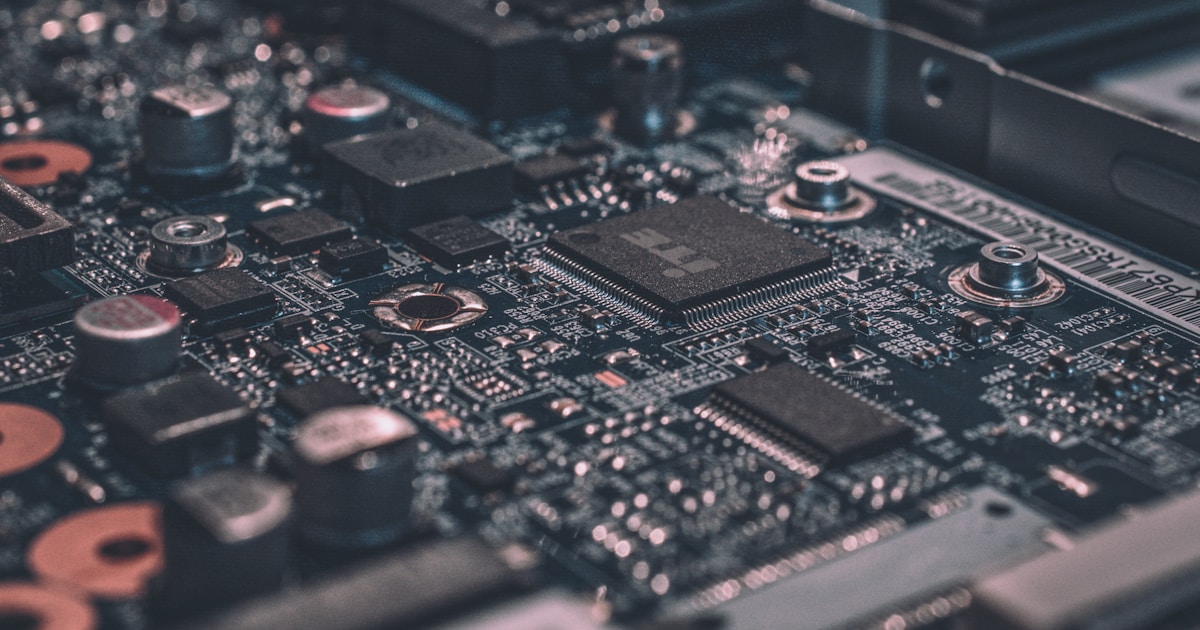
For decades, India has been a global powerhouse in chip design but a conspicuous absentee in chip manufacturing. Indian engineers have designed some of the world’s most advanced processors at companies like Intel, Qualcomm, and AMD, yet not a single commercial-grade semiconductor fabrication facility existed on Indian soil until very recently. India Semiconductor Mission 2.0, announced as part of Union Budget 2026-27, is the government’s most aggressive move yet to change that equation — with the Electronics Component Manufacturing Scheme (ECMS) outlay increased to Rs 40,000 crore and a broader, more strategic vision for building an end-to-end electronics manufacturing ecosystem.
This is not a marginal policy update. It is a fundamental escalation of India’s ambition in one of the most strategically important industries on Earth.
The Context: Why Semiconductors Matter More Than Ever
The global semiconductor shortage of 2020-2023 was a wake-up call for every major economy. When a single chip shortage can halt automobile production lines, disrupt consumer electronics supply, and even affect national defense capabilities, the strategic importance of semiconductor self-sufficiency becomes impossible to ignore.
The global semiconductor market is valued at over $600 billion and is projected to exceed $1 trillion by 2030. Currently, the supply chain is concentrated in a handful of countries:
- Taiwan (TSMC) accounts for over 60% of global foundry capacity and more than 90% of advanced node (<7nm) production
- South Korea (Samsung) is the second-largest foundry player and dominates the memory chip market
- China has invested over $150 billion in semiconductor development, though it still lags in advanced manufacturing
- The United States has passed the CHIPS Act with $52 billion in subsidies to reshore manufacturing
- The European Union has its own European Chips Act with a target of 20% global production share by 2030
India, despite having the fourth-largest electronics market in the world, has been essentially absent from this conversation — until now.
India Semiconductor Mission 1.0: What Happened
The original India Semiconductor Mission (ISM) was launched in December 2021 with an allocation of approximately Rs 76,000 crore ($10 billion) across multiple schemes. The mission covered:
- Semiconductor fabs: Up to 50% fiscal support for setting up fabrication plants
- Display fabs: Similar support for display manufacturing
- Compound semiconductors: Support for specialized chip materials (GaN, SiC)
- ATMP (Assembly, Testing, Marking, and Packaging): Support for back-end semiconductor operations
- Design-linked incentives: For fabless chip design companies
Key Developments Under Mission 1.0
Several significant projects were approved and initiated:
Tata Electronics emerged as the most prominent player, receiving approval for:
- A semiconductor fab in Dholera, Gujarat (in collaboration with PSMC, Taiwan)
- An ATMP facility in Morigaon, Assam
Vedanta-Foxconn initially announced an ambitious $19.5 billion semiconductor project in Gujarat but later saw Foxconn exit the joint venture. Vedanta subsequently partnered with other technology providers, though the project faced multiple restructurings.
CG Power (Murugappa Group) received approval for an OSAT (Outsourced Semiconductor Assembly and Test) facility.
Mission 1.0 demonstrated that India was serious about semiconductor manufacturing, but it also revealed challenges: project execution timelines were longer than expected, technology transfer agreements proved complex, and the sheer capital requirements of fab construction meant that only the largest conglomerates could realistically participate.
What Changed From Mission 1.0 to 2.0
India Semiconductor Mission 2.0 is not merely a continuation — it is a strategic recalibration based on the lessons learned from the first phase. Here are the key changes:
1. ECMS: Rs 40,000 Crore for Component Manufacturing
The most headline-grabbing change is the expanded Electronics Component Manufacturing Scheme (ECMS) with an outlay of Rs 40,000 crore. This is significant because it shifts focus beyond just chips to the broader electronics component ecosystem.
Semiconductor fabs cannot exist in isolation. They require a dense ecosystem of component suppliers — PCBs (printed circuit boards), passive components (resistors, capacitors), connectors, substrates, and packaging materials. India has been importing the vast majority of these components, creating a dependency that Mission 2.0 explicitly targets.
The ECMS aims to incentivize domestic manufacturing of these foundational components, reducing import dependence and creating the supply chain density that makes large-scale electronics manufacturing viable.
2. Rare Earth Corridors
Budget 2026 announced the establishment of rare earth corridors — designated zones with infrastructure, regulatory clearances, and logistics support for rare earth mineral processing. Rare earths are essential inputs for semiconductors, electric vehicles, defense equipment, and renewable energy technologies. India has significant rare earth reserves (the fifth-largest globally) but has barely developed its processing capabilities. The rare earth corridors aim to change that.
3. Container Manufacturing and Capital Goods
In a less-discussed but strategically important move, Budget 2026 also included support for container manufacturing and capital goods schemes. Semiconductor manufacturing requires highly specialized equipment — photolithography machines, etching systems, deposition tools — that India currently imports entirely. While building a domestic semiconductor equipment industry is a multi-decade endeavor, the capital goods support signals the beginning of that journey.
4. Broader Hardware Manufacturing Ecosystem
Mission 2.0 takes a more holistic view of the hardware manufacturing ecosystem. Rather than focusing solely on the chip itself, it recognizes that India needs to build capabilities across the entire value chain: from raw materials (rare earths, specialty chemicals) through components (PCBs, substrates) to final assembly and testing.
The Key Players and Beneficiaries
Large Conglomerates
Tata Electronics remains the flagship player. With its Dholera fab progressing (targeting 28nm and 40nm process nodes initially) and its Assam ATMP facility, Tata is building the most comprehensive semiconductor presence among Indian companies. The expanded ECMS will allow Tata to deepen its component manufacturing play.
Vedanta continues to pursue its semiconductor ambitions, though through a restructured approach. The company’s access to raw materials (through its mining operations) gives it a unique vertical integration potential in the semiconductor supply chain.
Reliance Industries has been conspicuously quiet on specific semiconductor fab plans but has been building electronics manufacturing capabilities through Jio Platforms. Given Reliance’s history of entering industries at scale once the policy framework is clear, Mission 2.0 could be the trigger for a more explicit semiconductor play.
Hardware Startups
The ECMS is perhaps most impactful for hardware startups — a category that has historically been underserved by India’s startup ecosystem, which skews heavily toward software and services. With Rs 40,000 crore in manufacturing incentives, startups working on:
- IoT devices and sensors
- Embedded systems
- Power electronics
- Automotive electronics
- Wearable technology
- Edge computing hardware
now have a more viable path to domestic manufacturing. The scheme can reduce the capital expenditure barrier that has forced many Indian hardware startups to manufacture in China or Taiwan.
Electronics Manufacturing Services (EMS)
Companies like Dixon Technologies, Kaynes Technology, Syrma SGS, and Amber Enterprises — India’s growing EMS players — stand to benefit significantly. The ECMS incentivizes not just the final product but the component manufacturing that feeds into EMS operations. As these companies scale, they create the demand pull that makes component manufacturing economically viable.
India vs. the Global Competition
It is worth placing India’s semiconductor ambitions in a global context:
| Country | Key Investment | Focus Area | Timeline |
|---|---|---|---|
| Taiwan | TSMC $65B annual capex | Advanced nodes (3nm, 2nm) | Ongoing |
| South Korea | $450B national plan | Memory, foundry expansion | 2021-2042 |
| China | $150B+ cumulative | Self-sufficiency across nodes | Ongoing |
| United States | $52B CHIPS Act | Reshoring advanced manufacturing | 2022-2032 |
| European Union | $46B European Chips Act | 20% global production share | 2023-2030 |
| India | ~Rs 1.5 lakh Cr total | Full ecosystem development | 2021-2030+ |
India is not attempting to compete with TSMC on cutting-edge 3nm or 2nm nodes — at least not in the near term. The strategy is more pragmatic: build capabilities in mature nodes (28nm-65nm) that serve the vast majority of automotive, industrial, IoT, and consumer electronics applications, while simultaneously developing the component and material ecosystem that could eventually support more advanced manufacturing.
This is a realistic approach. Over 70% of global chip demand by volume is for mature node semiconductors. India does not need to build the most advanced fabs in the world to be strategically relevant — it needs to build reliable, cost-competitive fabs that serve the growing domestic market and offer an alternative source of supply to global customers seeking to diversify away from Taiwan and China concentration risk.
Job Creation and Economic Impact
The semiconductor and electronics manufacturing ecosystem is a massive job creator. The government estimates that the various schemes under ISM 2.0 and ECMS will generate:
- Direct employment of 100,000+ in semiconductor fabs and component manufacturing
- Indirect employment of 500,000+ across the supply chain, logistics, and support services
- Skilled engineering jobs in chip design, process engineering, quality assurance, and equipment maintenance
This is particularly significant for Tier 2 and Tier 3 cities where many of the manufacturing facilities are being established. Dholera (Gujarat), Morigaon (Assam), and other locations chosen for semiconductor projects are not metro areas — they represent a deliberate effort to distribute the economic benefits of high-tech manufacturing more broadly.
The Talent Challenge
However, the talent challenge is real. India produces roughly 1.5 million engineering graduates annually, but the number with semiconductor-specific skills (VLSI design, process engineering, materials science) is a tiny fraction. Universities and training institutions are scrambling to develop curriculum and lab facilities to meet the anticipated demand. The government’s Semiconductor Research and Innovation Zone (SRIZ) initiative is aimed at bridging this gap, but building a deep semiconductor talent pipeline will take 5-10 years.
Investment Opportunities
For investors and entrepreneurs, India Semiconductor Mission 2.0 creates opportunities across several categories:
1. Component Manufacturing: The Rs 40,000 crore ECMS is an open invitation to invest in PCB manufacturing, passive component production, connector manufacturing, and semiconductor packaging materials. These are capital-intensive businesses but benefit directly from government incentives.
2. Design Services and IP: India’s strength in chip design is well-established. With domestic fabs coming online, there is an opportunity for Indian design firms to collaborate with domestic foundries to create India-designed, India-manufactured chips for specific applications (smart meters, EV controllers, telecom equipment).
3. Equipment and Materials: While the upstream equipment market is dominated by ASML, Applied Materials, and Tokyo Electron, there are opportunities in secondary equipment, maintenance services, specialty chemicals, and process gases.
4. Testing and Quality Assurance: As the manufacturing ecosystem scales, the demand for testing — both at the wafer level and at the packaged device level — will grow proportionally. Testing equipment, software, and services represent a significant market.
5. Ecosystem Enablers: Legal and regulatory consulting for semiconductor incentive applications, real estate development in semiconductor zones, logistics and supply chain management, and workforce training are all adjacent opportunities.
The Road Ahead
India Semiconductor Mission 2.0 is ambitious, but the execution challenges should not be underestimated. Building a semiconductor ecosystem is a generational effort — Taiwan’s journey from its first fab in 1987 to global dominance took over three decades. South Korea’s semiconductor investment program has been running since the 1980s. India is starting late, but it is starting with certain advantages: a large domestic market, a deep pool of design talent, and government commitment that spans multiple policy instruments.
The Rs 40,000 crore ECMS, combined with rare earth corridors, capital goods support, and the broader Make in India electronics framework, creates the most comprehensive policy environment India has ever had for hardware manufacturing. Whether this translates into globally competitive semiconductor capabilities will depend on execution speed, technology partnerships, talent development, and sustained policy commitment across election cycles.
For now, the direction is clear. India is not just talking about semiconductors anymore. It is building.
Suggested Internal Links:
- India’s AI Market to Hit $17 Billion by 2027 — Where the Growth Is Coming From
- Biopharma SHAKTI — India’s Rs 10,000 Cr Bet on Biopharmaceutical Innovation
Call to Action: Exploring opportunities in India’s semiconductor and electronics manufacturing ecosystem? CoderCops helps technology companies navigate government incentive programs, build development teams, and accelerate hardware-software integration projects. Connect with us to discuss your plans.
More from this category
More from Technology

The dispatch
Working notes from
the studio.
A short letter twice a month — what we shipped, what broke, and the AI tools earning their keep.
Discussion
Join the conversation.
Comments are powered by GitHub Discussions. Sign in with your GitHub account to leave a comment.