AI Integration · Robotics
Physical AI Is Here — How Robots, Drones & Autonomous Systems Are Changing Industries
Physical AI enables robots, drones & smart equipment to operate autonomously. See how Amazon, BMW & others are deploying embodied AI in 2026.

Anurag Verma
13 min read
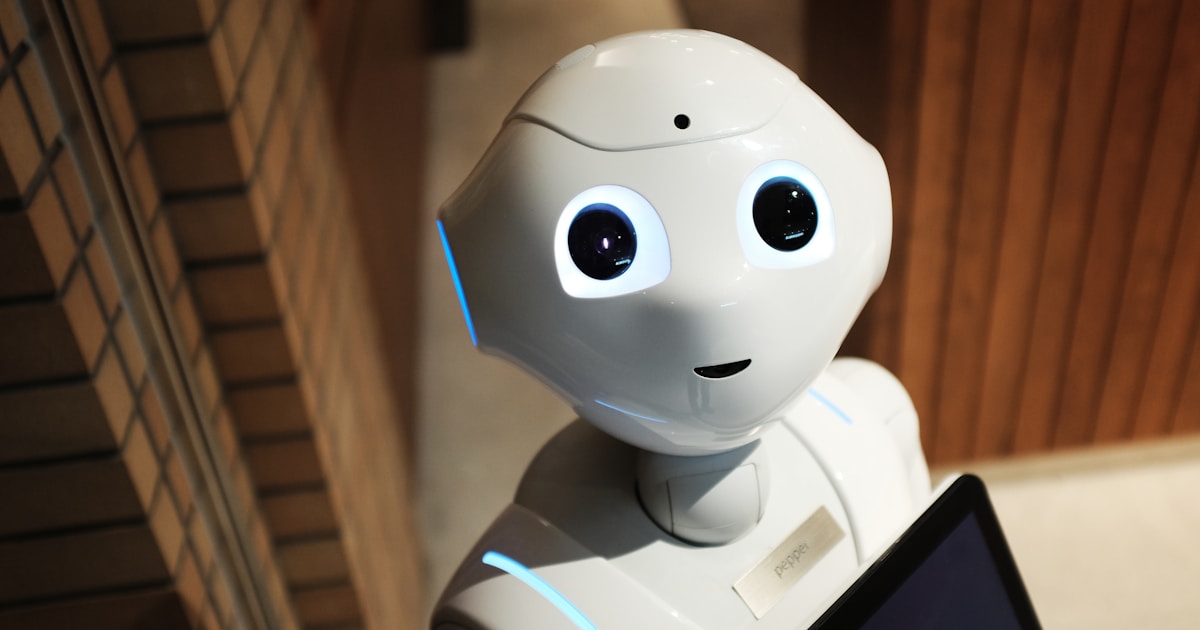
For years, artificial intelligence lived almost exclusively in the digital world. It powered search engines, recommendation algorithms, chatbots, and software tools — all useful, all impactful, but all confined to screens and servers. That era is ending.
Physical AI — sometimes called embodied AI — is the branch of artificial intelligence that enables machines to perceive, navigate, and interact with the real, physical world. It is the intelligence behind robots that pick and pack warehouse orders, drones that inspect power lines in remote terrain, autonomous vehicles that navigate factory floors, and agricultural machines that can identify and treat individual plants in a field of thousands.
In 2026, physical AI is no longer experimental. It is deployed, operational, and generating measurable returns across industries. And the scale of deployment is accelerating faster than most observers anticipated.
What Is Physical AI, and Why Does It Matter Now?
Physical AI refers to AI systems that operate in and interact with the physical environment. Unlike a chatbot or a recommendation engine, a physical AI system must deal with the messy, unpredictable, three-dimensional real world — where objects have weight and friction, lighting conditions change, surfaces are uneven, other agents (including humans) behave unpredictably, and failure can mean physical damage rather than a software error.
This makes physical AI significantly more challenging than purely digital AI. A language model can make a mistake and generate a correctable text error. A warehouse robot that misjudges the weight of a package can drop it, damage goods, or injure a nearby worker. The stakes are fundamentally different, and the engineering requirements reflect that.
So why is physical AI reaching commercial scale now? Three converging trends explain the timing:
Advanced perception systems. Modern computer vision, powered by deep learning models trained on vast datasets of real-world imagery, has reached a level of reliability that enables robots and drones to navigate complex environments with confidence. LiDAR, depth cameras, and multi-sensor fusion provide redundant perception capabilities that make physical AI systems robust enough for production use.
Foundation models for robotics. The same transformer architecture that powers large language models is being adapted for physical AI. Foundation models for robotics — trained on diverse datasets of physical interactions — allow robots to generalize learned behaviors to new situations, dramatically reducing the time and cost required to deploy robots in new environments.
Computational affordability. Edge computing hardware capable of running sophisticated AI models in real time has become significantly more powerful and affordable. Robots no longer need to stream data to a cloud server for processing — they can make intelligent decisions locally, in milliseconds, using onboard computing.
Amazon: One Million Robots and Counting
The most visible example of physical AI at industrial scale is Amazon, which has now deployed its millionth robot across its global fulfillment network. That number is worth pausing on. One million robots, operating alongside hundreds of thousands of human workers, in facilities spanning multiple continents.
Amazon’s robotic fleet has evolved dramatically from its early days of simple automated guided vehicles (AGVs) that followed magnetic strips on warehouse floors. Today’s Amazon robots include:
- Sparrow — robotic arms that can identify, select, and handle individual products from inventory bins, managing the kind of varied and unpredictable picking tasks that were previously considered too complex for automation
- Proteus — Amazon’s first fully autonomous mobile robot, capable of navigating warehouse environments without being confined to restricted areas, working safely alongside human employees
- Sequoia — an integrated robotic system that combines inventory storage, retrieval, and sorting into a streamlined workflow that reduces order processing time
The impact is measurable. Amazon has reported that its robotic systems have contributed to reducing fulfillment costs, improving order accuracy, and enabling faster delivery times. But perhaps more importantly, the company emphasizes that its robots are augmenting rather than replacing human workers — handling the most physically demanding and repetitive tasks while humans focus on problem-solving, quality control, and tasks requiring dexterity and judgment.
DeepFleet AI: Coordinating Fleet Intelligence
While Amazon represents the hardware-intensive approach to physical AI, DeepFleet AI illustrates the software-driven side. The company has developed AI systems that coordinate fleet operations — managing groups of autonomous vehicles, robots, and human workers as integrated teams.
DeepFleet AI’s technology is deployed in warehouse and logistics environments where multiple autonomous agents need to coordinate their movements, avoid conflicts, share tasks, and adapt to changing conditions in real time. The challenge is essentially one of multi-agent coordination — getting dozens or hundreds of autonomous machines to work together efficiently without centralized moment-by-moment human control.
The results are compelling. In deployed environments, DeepFleet AI’s coordination systems have improved warehouse travel efficiency by 10% — meaning that the total distance traveled by robots and human-operated equipment to fulfill orders has been reduced by a tenth. That may sound modest, but in a large fulfillment center processing millions of packages annually, a 10% reduction in travel translates to significant savings in time, energy, and wear on equipment.
What makes DeepFleet AI’s approach particularly interesting is its focus on human-AI collaboration. Rather than creating fully autonomous environments, the system is designed to coordinate fleet operations alongside human workers, dynamically adjusting robotic routes and task assignments to complement human activity rather than interfere with it.
BMW: Autonomous Vehicles on the Factory Floor
In manufacturing, BMW has become one of the most prominent examples of physical AI deployment. The automaker’s factories now feature autonomous vehicles that navigate production routes independently — transporting components, assemblies, and finished parts through complex factory environments without human drivers or predefined tracks.
BMW’s autonomous factory vehicles use a combination of LiDAR, cameras, and AI-based navigation to move through environments shared with human workers, traditional vehicles, and other equipment. The vehicles can dynamically adjust their routes based on real-time conditions — rerouting around obstacles, adjusting speed based on proximity to humans, and coordinating with other autonomous vehicles to prevent congestion.
This is a meaningful departure from traditional factory automation, which relies on fixed infrastructure — conveyor belts, overhead gantries, and rigidly defined pathways. BMW’s approach is flexible and adaptive. When production layouts change (which happens regularly in modern automotive manufacturing, where multiple models may be produced on the same line), the autonomous vehicles can be remapped without physical infrastructure changes.
The broader implication is significant. Manufacturing has historically required enormous capital investment in fixed automation infrastructure, which creates inertia — once a factory is built around a specific configuration, changing it is expensive and slow. Physical AI, in the form of autonomous mobile robots and vehicles, introduces flexibility that could fundamentally change how factories are designed and operated.
Beyond Warehouses and Factories: Where Physical AI Is Making an Impact
While logistics and manufacturing are the most visible sectors, physical AI is being deployed across a far broader range of industries.
Agriculture
Autonomous tractors, robotic harvesters, and AI-powered crop monitoring drones are transforming agriculture. Companies like John Deere have deployed autonomous machines that can plant, spray, and harvest with precision that reduces chemical usage, minimizes crop damage, and optimizes yields. AI-powered drones survey fields, detect early signs of disease or pest infestation, and create detailed maps that guide precision farming practices.
The agricultural applications of physical AI are particularly impactful because they address a structural challenge: the global farming workforce is aging and shrinking, even as demand for food continues to grow. Autonomous farming equipment does not replace farmers — it extends their capacity, enabling a single farmer to manage significantly more acreage with better outcomes.
Healthcare
Surgical robots powered by AI are becoming increasingly sophisticated. Systems like Intuitive Surgical’s da Vinci platform have been enhanced with AI capabilities that provide real-time guidance to surgeons, predict tissue behavior, and enable procedures with precision beyond human manual capability. Autonomous delivery robots transport medications and supplies through hospital corridors, and AI-powered rehabilitation systems guide patients through physical therapy exercises with adaptive feedback.
Construction
The construction industry, one of the least digitized sectors of the economy, is beginning to adopt physical AI. Autonomous bulldozers and excavators can perform site preparation work with GPS-guided precision. Drones conduct site surveys and progress monitoring, generating 3D models that are compared against architectural plans to identify deviations in real time. Robotic bricklaying systems and 3D concrete printers are demonstrating that autonomous construction is technically viable, even if widespread adoption remains in early stages.
Energy and Utilities
Drones equipped with AI-powered computer vision are inspecting power lines, wind turbines, oil platforms, and solar installations — tasks that are dangerous, time-consuming, and expensive when performed by human workers. These drones can detect defects, corrosion, and damage that might be invisible to the naked eye, enabling preventive maintenance that reduces downtime and prevents catastrophic failures.
In the oil and gas industry, autonomous underwater vehicles (AUVs) are inspecting subsea pipelines and infrastructure in conditions that are hazardous for human divers. In the renewable energy sector, AI-controlled robots are cleaning solar panels and performing maintenance on wind turbines, tasks that become increasingly important as renewable installations scale.
The Market: Size and Growth
The physical AI market is growing rapidly, driven by declining hardware costs, improving AI capabilities, and clear ROI in deployed applications.
The global market for industrial robotics alone was valued at approximately $55 billion in 2025 and is projected to grow at a compound annual rate of 12-15% through 2030. When you expand the definition to include autonomous drones, autonomous vehicles (both on-road and off-road), and AI-powered equipment across all industries, the total addressable market for physical AI likely exceeds $200 billion by 2030.
Venture capital investment in physical AI startups has surged, with particular interest in areas like autonomous warehouse systems, agricultural robotics, drone-as-a-service platforms, and humanoid robots. The entry of major technology companies — including NVIDIA with its Omniverse simulation platform, Google DeepMind with its robotics research, and Tesla with its Optimus humanoid robot program — has elevated the category’s profile and attracted additional capital.
The Shift from Digital-Only to Physical-World AI
The rise of physical AI represents a fundamental expansion of what artificial intelligence means and what it can accomplish. For the past decade, AI’s most celebrated achievements have been digital — beating humans at games, generating text and images, recognizing speech and faces. These are remarkable accomplishments, but they all happen within the controlled environment of silicon and software.
Physical AI brings intelligence into the real world, where the challenges are different and the impact is more tangible. A chatbot that hallucinates a fact is an inconvenience. A factory robot that misidentifies a component is a production stoppage. The bar for reliability, safety, and robustness is higher in the physical world, and meeting that bar requires different engineering approaches, different testing methodologies, and different deployment strategies.
This shift also changes the economics of AI. Digital AI primarily saves time and improves information processing. Physical AI saves time, reduces physical labor, improves safety, and creates capabilities that were previously impossible. The value creation is more direct and often easier to measure, which is why physical AI investments are generating strong returns and attracting increasing capital.
Challenges: Safety, Regulation, and the Workforce Question
Physical AI’s expansion is not without significant challenges that the industry must address thoughtfully.
Safety
When AI systems operate in the physical world alongside humans, safety is paramount. A software bug in a recommendation engine shows you an irrelevant product. A software bug in an autonomous warehouse robot could cause a collision. The safety engineering required for physical AI systems is substantially more rigorous than for digital-only AI, encompassing hardware redundancy, fail-safe mechanisms, extensive testing, and real-time monitoring.
Industry standards for physical AI safety are still evolving. Organizations like the International Organization for Standardization (ISO) and the Robotic Industries Association (RIA) have published guidelines, but the rapid pace of innovation means that standards often lag behind deployed technology. Closing this gap is critical for maintaining public trust and enabling continued deployment.
Regulation
Governments around the world are grappling with how to regulate physical AI systems. Autonomous drones face airspace regulations. Autonomous vehicles face transportation safety standards. Industrial robots face workplace safety requirements. The regulatory landscape is fragmented, with different jurisdictions taking different approaches, which creates complexity for companies deploying physical AI across multiple markets.
The most progressive regulatory approaches are risk-based — applying more stringent requirements to AI systems that operate in higher-risk environments (near humans, in public spaces, in safety-critical applications) while maintaining lighter oversight for lower-risk applications. The European Union’s AI Act, which began enforcement in 2025, provides a framework that other jurisdictions are watching closely.
Job Displacement and Workforce Transition
The most emotionally charged challenge surrounding physical AI is its impact on employment. When a robot can perform a warehouse picking task, what happens to the human who previously did that job?
The evidence so far suggests a more nuanced picture than the “robots taking all the jobs” narrative. Amazon, despite deploying a million robots, has consistently grown its human workforce alongside its robotic fleet. BMW’s autonomous factory vehicles have shifted human roles from driving to oversight and maintenance. In agriculture, autonomous equipment is addressing labor shortages rather than displacing existing workers.
However, the nature of available jobs is changing. Physical AI is eliminating the most repetitive, physically demanding, and dangerous tasks while creating demand for skills in robot programming, maintenance, supervision, and systems integration. This transition requires investment in training and education — and it requires companies and governments to be proactive about workforce development rather than reactive.
What the Future Holds
Physical AI in 2026 is where the internet was in the mid-1990s — clearly transformative, rapidly advancing, but still in its early chapters. The robots, drones, and autonomous systems deployed today are impressive, but they represent a fraction of what will be possible as the technology continues to mature.
The next frontiers include:
- Humanoid robots capable of performing a wide range of physical tasks in human-designed environments, from elderly care to retail assistance to disaster response
- Swarm intelligence enabling thousands of small, simple robots to coordinate on complex tasks like search and rescue, environmental monitoring, or construction
- Autonomous mobile manipulation allowing robots to not just navigate environments but to manipulate objects with human-like dexterity and adaptability
- Physical AI as a service enabling companies to deploy robotic capabilities without owning and maintaining the hardware, similar to how cloud computing abstracted away server ownership
The companies investing in physical AI today — whether deploying it in their own operations like Amazon and BMW, or building the platforms and tools that enable others to deploy it like NVIDIA and DeepFleet AI — are positioning themselves for a future where the boundary between digital intelligence and physical capability effectively disappears.
Physical AI is here. It is working. And it is just getting started.
Fascinated by how AI is moving from screens to the physical world? Subscribe to the CoderCops newsletter for weekly coverage of the technologies, companies, and trends reshaping industries through the convergence of artificial intelligence and the physical world.
More from this category
More from AI Integration
 R.01
R.01 Google Workspace Gets a Major AI Boost: Gemini Now Powers Docs, Sheets, Slides & Drive
 R.02
R.02 Agentic AI in 2026: Inside Google's Agent Leap Report and the Rise of Autonomous AI
 R.03
R.03 Best AI Coding Models Compared: The Definitive February 2026 Guide
The dispatch
Working notes from
the studio.
A short letter twice a month — what we shipped, what broke, and the AI tools earning their keep.
Discussion
Join the conversation.
Comments are powered by GitHub Discussions. Sign in with your GitHub account to leave a comment.