AI Integration · Industry News
Microsoft Unveils Maia 2 — Its Second-Gen AI Chip Takes Aim at NVIDIA's Developer Empire
Microsoft announced its second-generation Maia AI chip with software tools designed to challenge NVIDIA's CUDA dominance. The chip powers Azure AI workloads and signals Microsoft's push for AI infrastructure independence.

Anurag Verma
6 min read
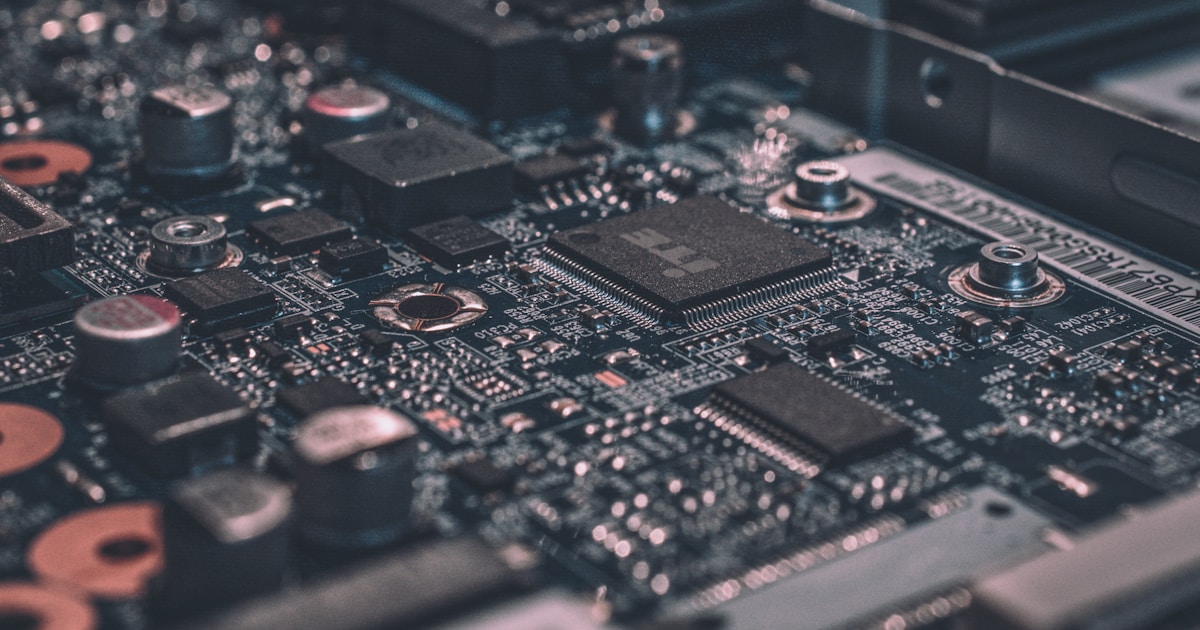
Microsoft has unveiled Maia 2, its second-generation custom AI chip, alongside a comprehensive software toolkit designed to challenge NVIDIA’s dominance in AI infrastructure. The chip is already deployed in Azure data centers and will be available to select Azure customers in Q2 2026.
More significant than the silicon itself is Microsoft’s software strategy. The company is releasing development tools that make it easier to port CUDA workloads to Maia — directly attacking NVIDIA’s developer ecosystem moat.
Maia 2 Specifications
| Specification | Maia 2 | NVIDIA H100 | Google TPU v5p |
|---|---|---|---|
| Process node | 5nm | 4nm | 5nm |
| Memory | 128GB HBM3e | 80GB HBM3 | 95GB HBM2e |
| Memory bandwidth | 4.8 TB/s | 3.35 TB/s | 2.4 TB/s |
| FP8 performance | 2.1 petaflops | 1.98 petaflops | 1.1 petaflops |
| Power consumption | 600W | 700W | ~450W |
| Interconnect | Custom fabric | NVLink | ICI |
Maia 2 matches or exceeds H100 on key specifications while consuming less power. The 128GB memory capacity is particularly notable — enough to run larger models without the memory constraints that limit H100 deployments.
The Software Play
Hardware specifications matter less than software ecosystem in AI infrastructure. NVIDIA’s dominance stems from CUDA — its proprietary programming model that most AI frameworks are built on. Developers know CUDA; frameworks optimize for CUDA; the ecosystem revolves around CUDA.
Microsoft’s software strategy attacks this moat:
Microsoft AI Software Stack
├── Maia Compiler
│   ├── CUDA code translation layer
│   ├── Automatic optimization for Maia architecture
│   └── Debugging and profiling tools
│
├── Framework Integration
│   ├── PyTorch backend (native support)
│   ├── TensorFlow backend (native support)
│   ├── ONNX Runtime optimization
│   └── Triton integration
│
├── Migration Tools
│   ├── CUDA → Maia code converter
│   ├── Performance comparison analysis
│   ├── Compatibility reports
│   └── Guided migration workflows
│
└── Azure Integration
    ├── Azure ML native support
    ├── Copilot Stack optimization
    ├── Automatic hardware selection
    └── Hybrid NVIDIA/Maia scheduling
The CUDA translation layer is the key innovation. Existing CUDA code can run on Maia with minimal modification, reducing the barrier to migration.
Why This Matters
Microsoft’s AI infrastructure dependency on NVIDIA creates several risks:
1. Supply constraints: NVIDIA cannot produce enough H100s to meet demand. Microsoft has waited months for chip deliveries, limiting Azure AI capacity.
2. Pricing power: NVIDIA’s monopoly position allows premium pricing. H100 prices have increased even as production scales.
3. Strategic vulnerability: Depending on a single supplier for critical infrastructure creates existential risk.
4. Innovation pace: Microsoft’s AI ambitions (Copilot, Azure OpenAI, Bing AI) are constrained by NVIDIA’s hardware roadmap.
By building Maia, Microsoft gains:
- Guaranteed supply for internal workloads
- Cost control on AI infrastructure
- Ability to optimize hardware for specific workloads
- Reduced strategic dependency
The Economics
Custom silicon only makes sense at massive scale. Microsoft’s economics work because of Azure’s size:
| Factor | Calculation |
|---|---|
| Azure AI revenue | ~$15B annually (estimated) |
| H100 costs | ~$25-30K per chip |
| Azure H100 fleet | ~500,000 chips (estimated) |
| Annual NVIDIA spend | ~$15B+ |
| Maia development cost | ~$500M-1B per generation |
| Break-even volume | ~50,000 chips |
If Maia 2 can replace even 20% of Microsoft’s NVIDIA purchases, the investment pays off within two years.
Azure Customer Access
Microsoft is rolling out Maia 2 access in phases:
| Phase | Timeline | Access |
|---|---|---|
| Internal only | Now | Microsoft services (Copilot, Bing, Azure OpenAI) |
| Preview | Q2 2026 | Select enterprise customers, research partners |
| General availability | Q4 2026 | All Azure customers |
During preview, customers can request Maia 2 instances for specific workloads. Microsoft will provide migration support and performance benchmarking against equivalent NVIDIA instances.
The NVIDIA Response
NVIDIA has several responses to the custom silicon threat:
1. Accelerate innovation: The Blackwell and Rubin architectures maintain NVIDIA’s performance lead, at least temporarily.
2. Lock in developers: Deeper CUDA integration, more proprietary features, harder migration.
3. Ecosystem expansion: Acquire or partner with companies that could otherwise support alternatives.
4. Pricing flexibility: Selective discounting for large customers considering alternatives.
NVIDIA’s CUDA moat remains formidable. Even with Microsoft’s migration tools, moving workloads is non-trivial. Most AI teams will not invest the effort unless the economics are compelling.
Implications for AI Development
The custom silicon trend — Microsoft Maia, Google TPU, Amazon Trainium, Meta MTIA — has several implications:
1. Reduced NVIDIA dependency: The hyperscalers are diversifying their chip portfolios, reducing NVIDIA’s market power.
2. Framework portability matters: AI frameworks that work across hardware backends (PyTorch, ONNX) gain importance.
3. Cloud vendor lock-in: Custom chips create new lock-in. Code optimized for Maia may not run optimally elsewhere.
4. Innovation competition: Multiple chip architectures competing accelerates innovation.
For Developers
If you are building AI applications on Azure, here is what changes:
Short term (2026):
- No action required
- Azure handles hardware selection automatically
- Existing CUDA workloads continue on NVIDIA
Medium term (2027):
- Consider testing workloads on Maia preview
- Evaluate performance and cost differences
- Avoid deep CUDA-specific dependencies
Long term (2028+):
- Expect Azure to prefer Maia for standard workloads
- NVIDIA instances may carry premium pricing
- Multi-backend framework skills become valuable
The Bigger Picture
Microsoft’s Maia 2 launch is part of a broader realignment in AI infrastructure. The hyperscalers — Microsoft, Google, Amazon, Meta — are all building custom silicon to reduce NVIDIA dependency.
This does not mean NVIDIA loses. The AI chip market is growing faster than custom silicon can capture. But it does mean NVIDIA’s monopoly pricing power will erode, and the AI infrastructure market will become more competitive.
For Microsoft, Maia 2 is about strategic independence. Copilot, Azure OpenAI, and every other Microsoft AI product depends on having enough compute capacity. Relying entirely on NVIDIA for that capacity is a risk Microsoft is no longer willing to accept.
More from this category
More from AI Integration
 R.01
R.01 Google Workspace Gets a Major AI Boost: Gemini Now Powers Docs, Sheets, Slides & Drive
 R.02
R.02 Agentic AI in 2026: Inside Google's Agent Leap Report and the Rise of Autonomous AI
 R.03
R.03 Best AI Coding Models Compared: The Definitive February 2026 Guide
The dispatch
Working notes from
the studio.
A short letter twice a month — what we shipped, what broke, and the AI tools earning their keep.
Discussion
Join the conversation.
Comments are powered by GitHub Discussions. Sign in with your GitHub account to leave a comment.