AI Integration · Infrastructure
AI Infrastructure in 2026: The Power Behind the Models
Understanding the AI infrastructure landscape in 2026 - from xAI's massive data centers to the chip supply chain. Learn how infrastructure decisions affect API pricing, latency, and your development choices.

Anurag Verma
8 min read

When you call an AI API, you’re tapping into one of the most complex and expensive infrastructure stacks ever built. Understanding this infrastructure isn’t just academic—it directly affects your application’s cost, latency, and reliability.
In 2026, the AI infrastructure landscape is undergoing dramatic changes that every developer should understand.

Why Infrastructure Matters for Developers
Before diving into the technical details, let’s establish why this matters for your day-to-day work:
| Infrastructure Factor | Developer Impact |
|---|---|
| Data center location | API latency (50-200ms difference) |
| GPU availability | Model availability and pricing |
| Power costs | Long-term API pricing trends |
| Chip supply chain | New model release timelines |
| Cooling technology | Density of compute, future pricing |
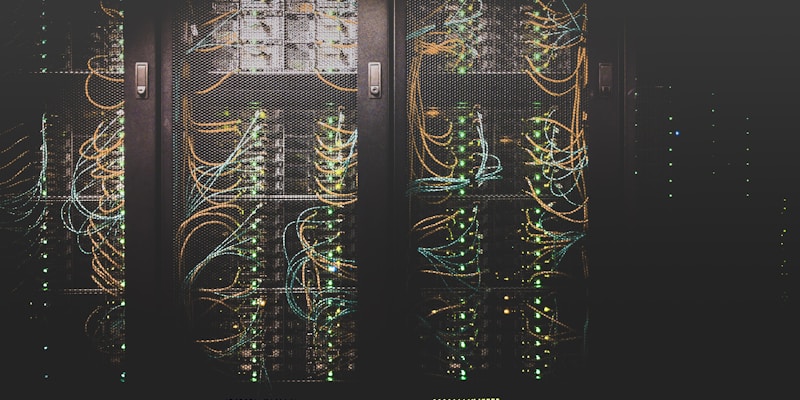
The Compute-Energy Bottleneck
AI training and inference require enormous amounts of electricity. Here’s the scale we’re talking about:
Power Requirements by Task
Task                    | Power Draw    | Annual Cost (at $0.10/kWh)
------------------------|---------------|---------------------------
Training GPT-4 class    | 10-20 MW      | $8-17 million
Running ChatGPT (peak)  | 50+ MW        | $44+ million
Training GPT-5 class    | 50-100 MW     | $44-87 million (estimated)
xAI Colossus cluster    | 150 MW        | $131 million
The Energy Equation
A single H100 GPU:
- Consumes 700W at full load
- Costs ~$30,000
- Has a 3-5 year useful life for cutting-edge work
At scale, power becomes the dominant cost:
# Simplified data center economics
def calculate_annual_cost(gpu_count: int, gpu_power_w: int = 700):
    # Power costs
    pue = 1.3  # Power Usage Effectiveness (cooling overhead)
    power_kw = (gpu_count * gpu_power_w * pue) / 1000
    electricity_rate = 0.08  # $/kWh (industrial rate)
    hours_per_year = 8760

    power_cost = power_kw * electricity_rate * hours_per_year

    # Hardware costs (amortized over 4 years)
    gpu_cost = gpu_count * 30000 / 4

    # Staff, networking, facilities (rough estimate)
    overhead = gpu_count * 5000

    return {
        'power_cost': power_cost,
        'hardware_cost': gpu_cost,
        'overhead': overhead,
        'total': power_cost + gpu_cost + overhead,
        'cost_per_gpu_hour': (power_cost + gpu_cost + overhead) / (gpu_count * hours_per_year)
    }

# Example: 10,000 GPU cluster
costs = calculate_annual_cost(10000)
# power_cost: ~$63.5M
# hardware_cost: ~$75M
# total: ~$188.5M
# cost_per_gpu_hour: ~$2.15
Major Infrastructure Players in 2026
xAI’s Colossus and Mississippi Expansion
Elon Musk’s xAI has been building at a staggering pace:
Colossus (Memphis, TN)
- 100,000+ H100 GPUs
- 150 MW power capacity
- Built in just 122 days
- Training Grok-3 and beyond
Mississippi Expansion
- $20 billion investment announced
- Target: 1+ million GPUs
- 1 GW power requirement
- Operational timeline: 2026-2027
OpenAI’s Infrastructure Strategy
OpenAI has taken a different approach:
- Partnership with Microsoft Azure for primary compute
- Stargate project announced (potential $100B+ investment)
- Focus on renewable energy commitments
- Custom chip development with Broadcom
Google’s TPU Ecosystem
Google continues to build vertically integrated infrastructure:
- TPU v6 available in Cloud
- Custom networking (Jupiter fabric)
- Renewable energy matching for all AI compute
- Distributed training across global data centers
Anthropic’s Approach
Anthropic operates primarily on:
- Google Cloud Platform (primary)
- Amazon Web Services (partnership)
- Focus on efficiency over raw scale

The Chip Supply Chain
Everything traces back to a handful of companies:
┌─────────────────────────────────────────────────────────────┐
│                    AI Chip Supply Chain                      │
├─────────────────────────────────────────────────────────────┤
│                                                              │
│  Design          Manufacture        Memory         Packaging │
│  ──────          ───────────        ──────         ──────── │
│                                                              │
│  NVIDIA ──────────┐                                          │
│  AMD    ──────────┼──▶ TSMC ◀──── HBM ◀── SK Hynix          │
│  Intel  ──────────┤        │      (Memory)   Samsung         │
│  Google ──────────┘        │                  Micron          │
│                            │                                  │
│                            ▼                                  │
│                      CoWoS/InFO                              │
│                    (Advanced Packaging)                       │
│                            │                                  │
│                            ▼                                  │
│                    Final Assembly ──▶ Data Centers           │
│                                                              │
└─────────────────────────────────────────────────────────────┘
TSMC’s Critical Role
Taiwan Semiconductor Manufacturing Company (TSMC) is the bottleneck:
- Manufactures 90%+ of advanced AI chips
- 3nm process currently in production
- 2nm process coming 2026-2027
- N2P (enhanced 2nm) planned for 2027-2028
The HBM Shortage
High Bandwidth Memory (HBM) is another constraint:
| HBM Generation | Bandwidth | Capacity | Status |
|---|---|---|---|
| HBM3 | 819 GB/s | 24GB | Current |
| HBM3e | 1.2 TB/s | 36GB | Ramping |
| HBM4 | 1.5+ TB/s | 48GB | 2026 |
SK Hynix, Samsung, and Micron are all racing to expand HBM capacity, but demand continues to outpace supply.
How Infrastructure Affects API Pricing
Understanding the cost structure helps predict pricing trends:
Current Pricing Breakdown (Estimated)
For a typical LLM inference API:
Component               | % of Cost | Notes
------------------------|-----------|-------------------------
GPU compute             | 40-50%    | H100 amortization + power
Memory/storage          | 10-15%    | Prompt caching, KV cache
Networking              | 10-15%    | Inter-GPU, CDN
Staff/operations        | 10-20%    | Engineers, ops, support
Facilities              | 5-10%     | Real estate, cooling
Margin                  | 15-25%    | Varies by provider
Price Trends to Watch
- GPU prices are falling as supply increases → Lower inference costs
- Energy costs vary by region → Regional pricing differences
- Efficiency improvements in models → More output per dollar
- Competition increasing → Downward price pressure
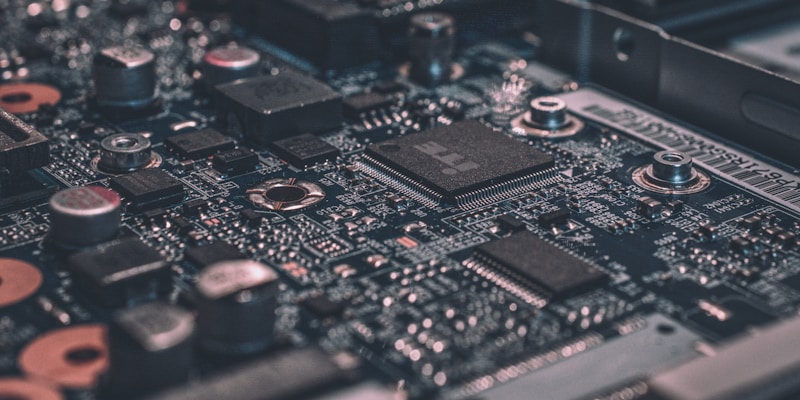
Edge vs Cloud Deployment Considerations
When Cloud Makes Sense
// Cloud deployment: good for
const cloudUseCases = [
  'Large model inference (70B+ parameters)',
  'Variable/unpredictable load',
  'Multi-region requirements',
  'Rapid iteration on prompts',
  'Cost-sensitive experimentation'
];

// Example: Using cloud for a chatbot
import Anthropic from '@anthropic-ai/sdk';

const anthropic = new Anthropic();

async function cloudInference(userMessage: string) {
  const response = await anthropic.messages.create({
    model: 'claude-3-5-sonnet-20241022',
    max_tokens: 1024,
    messages: [{ role: 'user', content: userMessage }]
  });
  return response;
}
When Edge/On-Premise Makes Sense
# Edge deployment: good for
edge_use_cases = [
    'Latency-critical applications (<50ms)',
    'Data sovereignty requirements',
    'Consistent high-volume workloads',
    'Offline capability needed',
    'Sensitive data that cannot leave premises'
]

# Example: Local deployment with vLLM
from vllm import LLM, SamplingParams

# Load model once at startup
llm = LLM(
    model="meta-llama/Llama-3.2-8B-Instruct",
    tensor_parallel_size=2,  # Use 2 GPUs
    gpu_memory_utilization=0.9
)

sampling_params = SamplingParams(
    temperature=0.7,
    max_tokens=512
)

def local_inference(prompt: str) -> str:
    outputs = llm.generate([prompt], sampling_params)
    return outputs[0].outputs[0].text
Hybrid Architectures
Many production systems use both:
interface InferenceRouter {
  routeRequest(request: AIRequest): Promise<AIResponse>;
}

class HybridInferenceRouter implements InferenceRouter {
  private localModel: LocalLLM;
  private cloudClient: CloudAIClient;

  async routeRequest(request: AIRequest): Promise<AIResponse> {
    // Route based on requirements
    if (request.requiresLowLatency && request.tokenCount < 2000) {
      // Use local inference for speed
      return await this.localModel.generate(request);
    }

    if (request.requiresAdvancedReasoning) {
      // Use cloud for complex tasks
      return await this.cloudClient.generate(request);
    }

    // Default to cost-optimized routing
    if (this.localModel.isAvailable() && !this.localModel.isOverloaded()) {
      return await this.localModel.generate(request);
    }

    return await this.cloudClient.generate(request);
  }
}
Building for Infrastructure Resilience
Multi-Provider Strategy
Don’t depend on a single AI provider:
interface AIProvider {
  name: string;
  generate(prompt: string): Promise<string>;
  isHealthy(): Promise<boolean>;
}

class ResilientAIClient {
  private providers: AIProvider[];
  private primaryIndex: number = 0;

  constructor(providers: AIProvider[]) {
    this.providers = providers;
  }

  async generate(prompt: string): Promise<string> {
    // Try primary provider first
    for (let i = 0; i < this.providers.length; i++) {
      const providerIndex = (this.primaryIndex + i) % this.providers.length;
      const provider = this.providers[providerIndex];

      try {
        if (await provider.isHealthy()) {
          return await provider.generate(prompt);
        }
      } catch (error) {
        console.error(`Provider ${provider.name} failed:`, error);
        continue;
      }
    }

    throw new Error('All AI providers unavailable');
  }
}

// Usage
const client = new ResilientAIClient([
  new AnthropicProvider(),
  new OpenAIProvider(),
  new GoogleProvider()
]);
Graceful Degradation
async function smartGeneration(prompt: string, requirements: Requirements) {
  try {
    // Try best model first
    return await callAPI(prompt, 'claude-opus-4-5');
  } catch (error) {
    if (error.code === 'RATE_LIMITED' || error.code === 'OVERLOADED') {
      // Fall back to faster model
      console.log('Primary model unavailable, falling back');
      return await callAPI(prompt, 'claude-3-5-sonnet');
    }

    if (error.code === 'SERVICE_UNAVAILABLE') {
      // Try different provider
      return await callAlternativeProvider(prompt);
    }

    throw error;
  }
}
Future Outlook
Near-Term (2026-2027)
- More competition as xAI, Amazon, and others scale up
- Prices continue falling for standard inference
- Regional availability improves with new data centers
- Specialized hardware for specific model architectures
Medium-Term (2027-2029)
- 2nm chips dramatically improve efficiency
- Optical interconnects reduce networking bottlenecks
- Nuclear-powered data centers for stable, clean energy
- On-device AI handles more use cases
What Developers Should Do
- Architect for portability - Don’t lock into one provider
- Monitor infrastructure news - It affects your costs
- Consider total cost - Including latency impact on users
- Plan for edge - On-device AI is coming fast
- Build caching layers - Reduce dependency on live inference
Key Takeaways
- AI infrastructure is energy-constrained - Power is the real limit
- TSMC is the critical bottleneck - Chip supply affects everyone
- Prices will continue falling - But unevenly across providers
- Edge deployment is becoming viable - For many use cases
- Multi-provider strategies are essential - For reliability
Resources
- NVIDIA Data Center Documentation
- Google Cloud AI Infrastructure
- AWS AI Infrastructure
- TSMC Technology Roadmap
Understanding infrastructure helps you make better architectural decisions. Stay informed with CODERCOPS.
More from this category
More from AI Integration
 R.01
R.01 Google Workspace Gets a Major AI Boost: Gemini Now Powers Docs, Sheets, Slides & Drive
 R.02
R.02 Agentic AI in 2026: Inside Google's Agent Leap Report and the Rise of Autonomous AI
 R.03
R.03 Best AI Coding Models Compared: The Definitive February 2026 Guide
The dispatch
Working notes from
the studio.
A short letter twice a month — what we shipped, what broke, and the AI tools earning their keep.
Discussion
Join the conversation.
Comments are powered by GitHub Discussions. Sign in with your GitHub account to leave a comment.