AI Integration · Hardware
NVIDIA Vera Rubin and DLSS 4.5: What Developers and Gamers Need to Know
NVIDIA announces Vera Rubin architecture in production and DLSS 4.5 with Transformer-based Super Resolution. Here's the complete breakdown of what's new and what it means for gaming and AI workloads.

Anurag Verma
7 min read
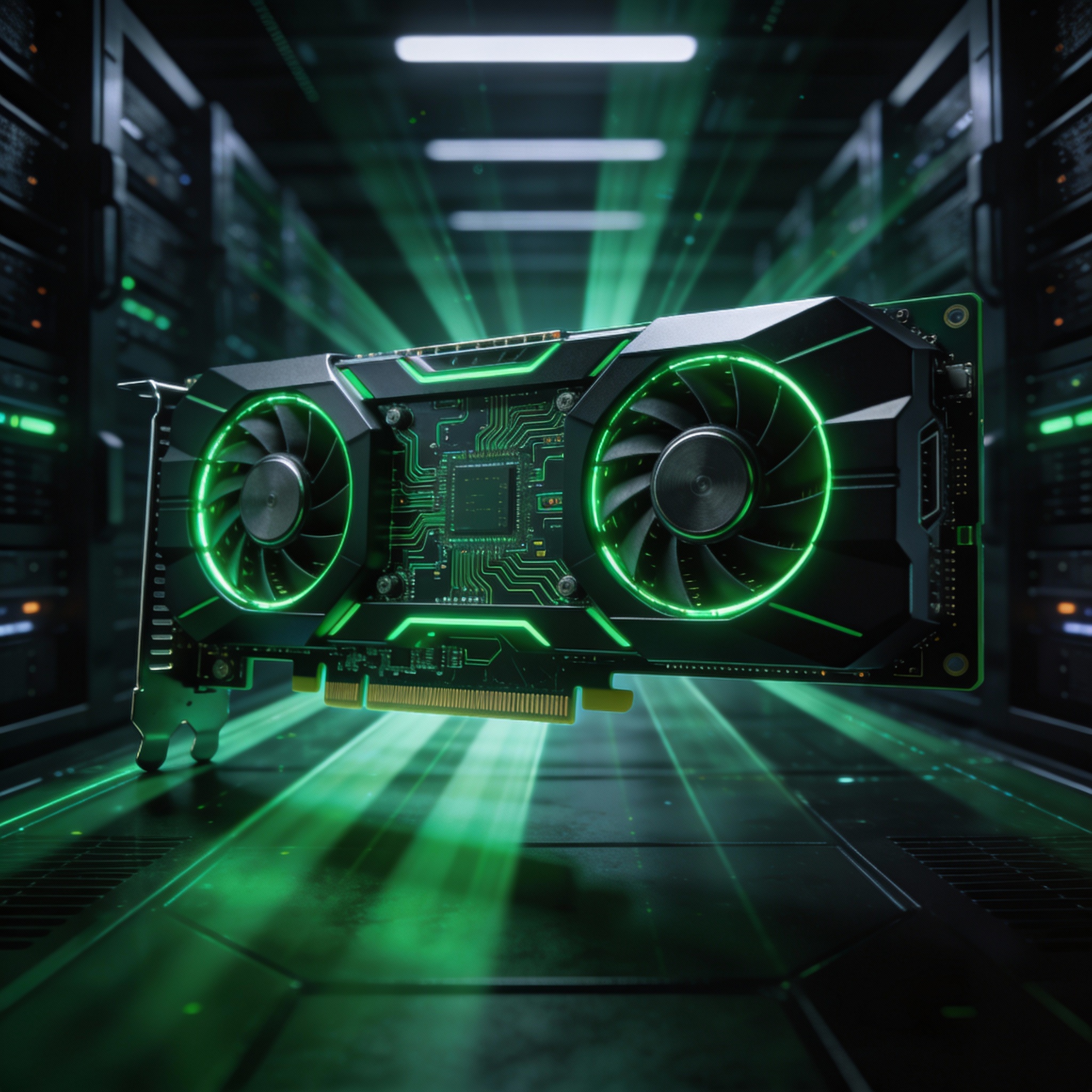
NVIDIA dropped major announcements at CES 2026: the Vera Rubin architecture is officially in production, and DLSS 4.5 brings Transformer-based upscaling to gaming. For developers working with AI and graphics, these aren’t just incremental updates—they’re generational leaps.

Vera Rubin: The Next Generation
Named after the astronomer who proved the existence of dark matter, Vera Rubin succeeds the Blackwell architecture and represents NVIDIA’s biggest architectural leap since Ampere.
What’s New in Vera Rubin
Architecture Evolution
├── Ampere (2020) - Baseline
│   └── RTX 30 Series
├── Ada Lovelace (2022) - 2x ray tracing
│   └── RTX 40 Series
├── Blackwell (2024) - 2x AI compute
│   └── RTX 50 Series
└── Vera Rubin (2026) - Unified AI fabric
    └── RTX 60 Series (Late 2026)
Key Specifications (Leaked/Announced)
| Feature | Blackwell | Vera Rubin | Improvement |
|---|---|---|---|
| AI TOPS | 1,400 | 3,000+ | 2.1x |
| RT Cores (Gen) | 4th | 5th | 40% faster |
| Tensor Cores | 5th Gen | 6th Gen | FP4 support |
| Memory | GDDR7 | GDDR7X | 30% bandwidth |
| Process | TSMC 4nm | TSMC 3nm | 25% efficiency |
| Interconnect | NVLink 5 | NVLink 6 | 2x bandwidth |
The AI Fabric Architecture
Vera Rubin introduces a “unified AI fabric” that eliminates traditional bottlenecks:
Traditional GPU Pipeline:
CPU → PCIe → GPU Memory → Compute → GPU Memory → PCIe → CPU
Bottleneck: Memory bandwidth and PCIe transfers

Vera Rubin AI Fabric:
┌─────────────────────────────────────────┐
│           Unified AI Memory Pool         │
│  ┌─────┐  ┌─────┐  ┌─────┐  ┌─────┐    │
│  │ SM  │  │ SM  │  │ RT  │  │Tensor│    │
│  │Cores│  │Cores│  │Cores│  │Cores │    │
│  └──┬──┘  └──┬──┘  └──┬──┘  └──┬───┘    │
│     └────────┴────────┴────────┘         │
│              AI Fabric                    │
└─────────────────────────────────────────┘
Zero-copy access, dynamic workload balancing
DLSS 4.5: The Transformer Revolution
DLSS 4.5 is the biggest update to Deep Learning Super Sampling since its introduction. The headline feature: Transformer-based Super Resolution.
What’s New
- Transformer Model - Replaces CNN-based upscaling with attention mechanisms
- Dynamic Multi Frame Generation - Automatically targets your display’s refresh rate
- Ray Reconstruction 2.0 - Better denoising for ray-traced effects
- Ultra Performance Mode - 8x upscaling for extreme performance gains
How Transformer Super Resolution Works
# Traditional CNN-based DLSS (4.0)
class DLSS_CNN:
    def upscale(self, low_res_frame, motion_vectors, depth):
        features = self.conv_layers(low_res_frame)
        temporal = self.temporal_accumulation(features, motion_vectors)
        return self.output_conv(temporal)  # Local receptive field

# Transformer-based DLSS (4.5)
class DLSS_Transformer:
    def upscale(self, low_res_frame, motion_vectors, depth, history):
        # Patch embedding with positional encoding
        patches = self.embed_patches(low_res_frame)

        # Self-attention across entire frame
        attended = self.transformer_blocks(patches)

        # Cross-attention with temporal history
        temporal = self.cross_attention(attended, history)

        # Global understanding of frame context
        return self.decode(temporal)  # Global receptive field
The key difference: Transformers see the entire frame at once, understanding global context like reflections, shadows, and distant objects that CNNs miss.
Visual Quality Comparison
| Scenario | DLSS 3.5 | DLSS 4.5 | Improvement |
|---|---|---|---|
| Fine text | Artifacts | Clean | Major |
| Thin geometry | Shimmer | Stable | Major |
| Fast motion | Ghosting | Clean | Significant |
| Ray-traced reflections | Noise | Smooth | Significant |
| Complex foliage | Blur | Sharp | Moderate |
Dynamic Multi Frame Generation
DLSS 4.5 introduces intelligent frame generation that adapts to your display:
Display: 240Hz Monitor
Game renders: 60 FPS

DLSS 4.5 Dynamic MFG:
├── Base frame (game): 1/60s
├── Generated frame: 1/240s
├── Generated frame: 1/240s
├── Generated frame: 1/240s
├── Base frame (game): 1/60s
└── Repeats...

Result: 240 displayed FPS from 60 rendered FPS
Latency: Lower than fixed 3x generation
The system dynamically adjusts generation ratio based on:
- Current GPU load
- Motion complexity
- Display capabilities
- User latency preferences
For Developers: What Changes
CUDA 14 Features
Vera Rubin ships with CUDA 14, introducing:
// New FP4 tensor operations
__global__ void fp4_gemm_kernel(
    fp4_t* A, fp4_t* B, fp16_t* C,
    int M, int N, int K
) {
    // 4-bit matrix multiply with 16-bit accumulation
    // 2x throughput vs FP8
    wmma::fragment<wmma::matrix_a, 32, 32, 32, fp4_t> a_frag;
    wmma::fragment<wmma::matrix_b, 32, 32, 32, fp4_t> b_frag;
    wmma::fragment<wmma::accumulator, 32, 32, 32, fp16_t> c_frag;

    wmma::load_matrix_sync(a_frag, A, K);
    wmma::load_matrix_sync(b_frag, B, N);
    wmma::mma_sync(c_frag, a_frag, b_frag, c_frag);
}
New OptiX 9 Ray Tracing
// OptiX 9 with hardware-accelerated path guiding
optixProgramGroupCreate(
    context,
    &pgDesc,
    1,
    &pgOptions,
    &programGroup
);

// New: Built-in restir for real-time path tracing
pgOptions.restir.enabled = true;
pgOptions.restir.temporalReuse = true;
pgOptions.restir.spatialReuse = true;
TensorRT 11
import tensorrt as trt

# New quantization options in TensorRT 11
config.set_flag(trt.BuilderFlag.FP4)  # New in Vera Rubin
config.set_flag(trt.BuilderFlag.SPARSE_WEIGHTS)
config.set_flag(trt.BuilderFlag.PREFER_PRECISION_CONSTRAINTS)

# Automatic FP4 quantization with calibration
calibrator = trt.IInt8EntropyCalibrator2(
    data_loader,
    cache_file="calibration.cache",
    precision=trt.DataType.FP4  # New
)
Gaming Benchmarks (Projected)
Based on early leaks and NVIDIA’s historical patterns:
4K Gaming (RTX 6090 vs RTX 5090)
| Game | RTX 5090 | RTX 6090 (Projected) | Improvement |
|---|---|---|---|
| Cyberpunk 2077 RT Ultra | 85 FPS | 140 FPS | 65% |
| Alan Wake 2 RT | 75 FPS | 120 FPS | 60% |
| Avatar: Frontiers | 95 FPS | 150 FPS | 58% |
| Path Traced Minecraft | 120 FPS | 200 FPS | 67% |
With DLSS 4.5 Performance mode
AI Workloads
| Workload | RTX 5090 | RTX 6090 (Projected) |
|---|---|---|
| Stable Diffusion XL | 2.1 img/s | 4.5 img/s |
| LLM Inference (7B) | 45 tok/s | 95 tok/s |
| Video Encoding (H.266) | 120 FPS | 200 FPS |
| NeRF Training | 15 min | 7 min |
G-Sync Pulsar
NVIDIA also announced G-Sync Pulsar, a new display technology:
- Purpose: Eliminate monitor-based motion blur
- How: Ultra-fast backlight strobing synchronized with G-Sync
- Result: CRT-like clarity with LCD convenience
- Requirement: G-Sync Pulsar certified monitors (2026+)
Timeline and Pricing (Rumored)
| Product | Expected Launch | Price Range |
|---|---|---|
| RTX 6090 | Q4 2026 | $2,000-2,500 |
| RTX 6080 | Q4 2026 | $1,200-1,500 |
| RTX 6070 Ti | Q1 2027 | $600-800 |
| RTX 6070 | Q1 2027 | $450-550 |
| RTX 6060 | Q2 2027 | $300-400 |
What This Means for Different Users
Gamers
- Wait for RTX 60 series if you can
- DLSS 4.5 alone is worth the upgrade from RTX 30 series
- G-Sync Pulsar monitors will be expensive initially
AI/ML Developers
- FP4 support enables larger models on consumer GPUs
- Unified AI fabric reduces CPU bottlenecks
- TensorRT 11 optimizations are significant
Content Creators
- Real-time path tracing becomes practical
- Video encoding/decoding gets major boost
- NeRF and 3D Gaussian Splatting workflows improve
Enterprise
- Data center Vera Rubin products in H2 2026
- Significant TCO improvements for inference
- Better multi-GPU scaling with NVLink 6
The Competition
AMD and Intel aren’t standing still:
| Company | Response | Expected |
|---|---|---|
| AMD | RDNA 5 | Q1 2027 |
| Intel | Celestial | Q2 2027 |
| Apple | M5 Ultra | Late 2026 |
But NVIDIA’s software ecosystem (CUDA, TensorRT, Omniverse) remains the moat.
Resources
Building GPU-accelerated applications or planning AI infrastructure? Contact CODERCOPS for expert guidance on leveraging next-generation NVIDIA hardware.
More from this category
More from AI Integration
 R.01
R.01 Google Workspace Gets a Major AI Boost: Gemini Now Powers Docs, Sheets, Slides & Drive
 R.02
R.02 Agentic AI in 2026: Inside Google's Agent Leap Report and the Rise of Autonomous AI
 R.03
R.03 Best AI Coding Models Compared: The Definitive February 2026 Guide
The dispatch
Working notes from
the studio.
A short letter twice a month — what we shipped, what broke, and the AI tools earning their keep.
Discussion
Join the conversation.
Comments are powered by GitHub Discussions. Sign in with your GitHub account to leave a comment.